预约演示
更新于:2026-08-22
EGFR(Syndivia)
更新于:2026-08-22
概要
基本信息
原研机构 |
在研机构 |
非在研机构- |
权益机构- |
最高研发阶段临床前 |
首次获批日期- |
最高研发阶段(中国)- |
特殊审评- |
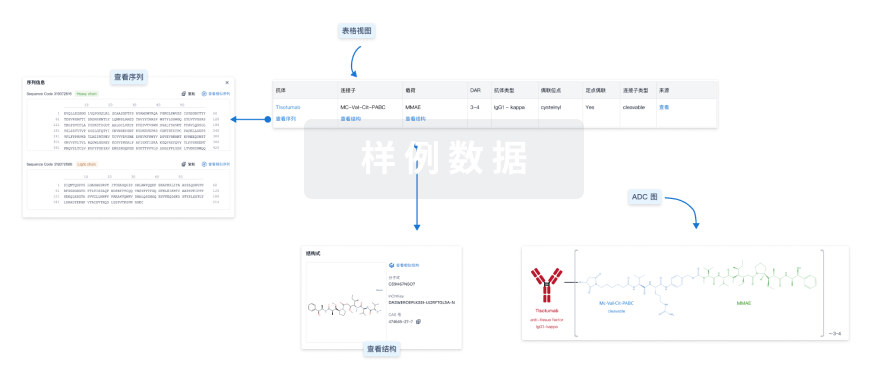
结构/序列
使用我们的ADC技术数据为新药研发加速。
登录
或
关联
100 项与 EGFR(Syndivia) 相关的临床结果
登录后查看更多信息
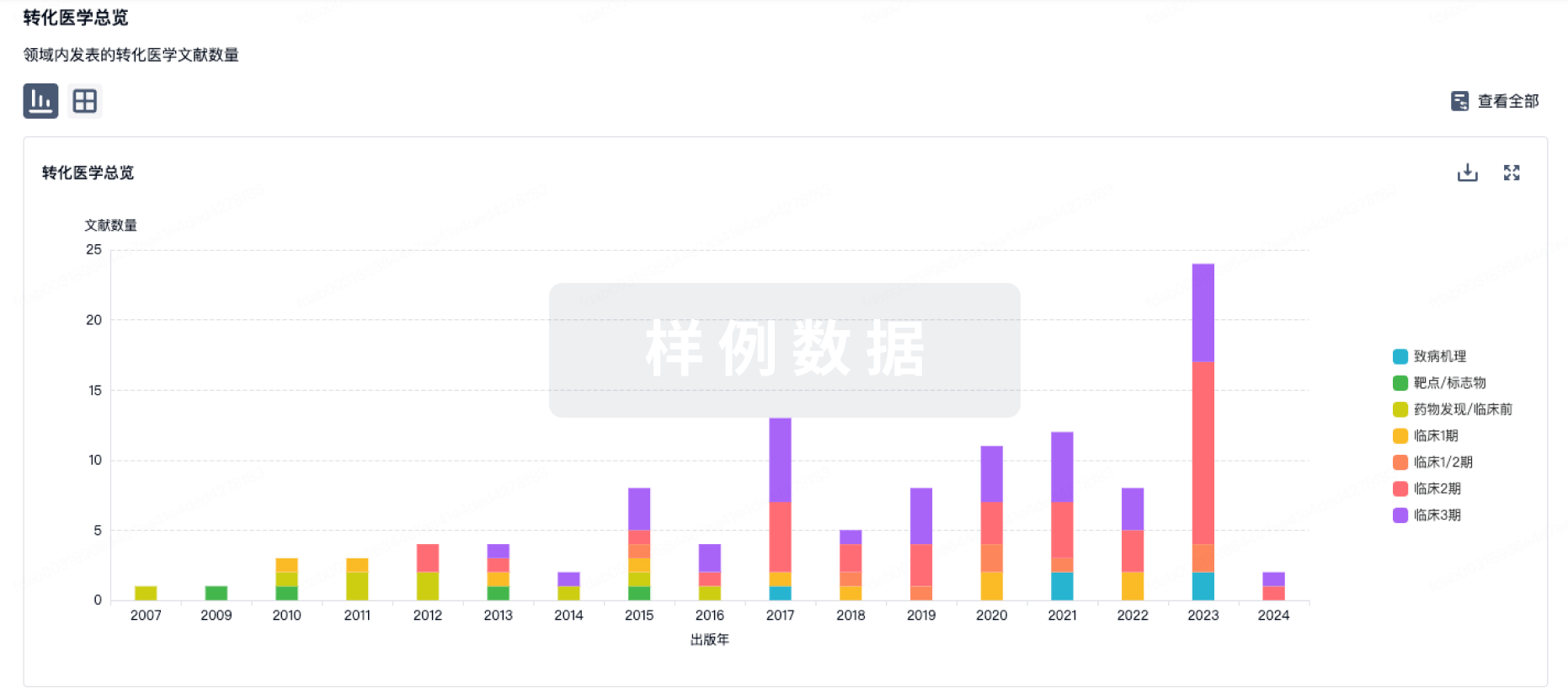
100 项与 EGFR(Syndivia) 相关的转化医学
登录后查看更多信息
100 项与 EGFR(Syndivia) 相关的专利(医药)
登录后查看更多信息
3
项与 EGFR(Syndivia) 相关的文献(医药)2025-10-01·NATURE MEDICINE
A bispecific antibody–drug conjugate targeting EGFR and HER3 in metastatic esophageal squamous cell carcinoma: a phase 1b trial
Article
作者: Zhu, Yi ; Lu, Zhihao ; Liu, Chang ; Li, Jian ; Ge, Sai ; Liu, Dan ; Qi, Changsong ; Xiao, Sa ; Wang, Zhenghang ; Zhou, Jun ; Lu, Ming ; Sun, Meili ; Zhang, Miao ; Gao, Shegan ; Ji, Yinghua ; Zhu, Ji ; Shen, Lin ; Zhu, Hai ; Zhang, Panpan ; Wang, Yakun ; Yuan, Jiajia ; Ma, Xuelei ; Zhong, Diansheng ; Peng, Zhi ; Cao, Yanshuo ; Gong, Jifang ; Zhang, Xiaotian ; Xue, Ran
Research on patients with advanced esophageal squamous cell carcinoma (ESCC) who have progressed on immunotherapy remains limited. BL-B01D1 is a first-in-class antibody-drug conjugate consisting of an EGFR-HER3 bispecific antibody bound to a topoisomerase I inhibitor (Ed-04) payload via a cleavable linker. Here, we present safety and efficacy data from a phase 1 study of BL-B01D1, in 82 patients previously treated for ESCC. The primary endpoint was the recommended phase 2 dose. Administered doses were 2.0 (n = 22) and 2.5 (n = 60) mg kg-1 D1D8 infusion every 3 weeks (Q3W). The confirmed objective response rate (cORR) was 29.3% (24 of 82) in all patients and 32.9% (24 of 73) among evaluable patients. For patients dosed at 2.5 mg kg-1, cORR was 39.6% (21 of 53) and disease control rate was 79.2% (42 of 53). In the 2.0 mg kg-1 group, cORR was 15.0% (3 of 20), and the disease control rate was 50.0% (10 of 20). The phase 2 dose was established at 2.5 mg kg-1 D1D8 Q3W. The incidence of G3 treatment-related adverse events at 2.5 mg kg-1 was 63.3%; most common adverse events were anemia (28.3%), leukopenia and thrombocytopenia (18.3%, each), and neutropenia (16.7%). Two cases of ≥G3 interstitial lung disease were observed. Overall, BL-B01D1 demonstrated promising efficacy and manageable safety in patients with metastatic ESCC. A further phase 3 clinical trial has already been initiated. ClinicalTrials.gov registration: NCT05262491 .
2021-09-01·Molecular therapy oncolytics2区 · 医学
CXCR5 guides migration and tumor eradication of anti-EGFR chimeric antigen receptor T cells
2区 · 医学
ArticleOA
作者: Min Luo ; Wen Ding ; Wenjun Mo ; Yanfang Zheng ; Guangchao Li ; Jintao Guo ; Lingyu Qin ; Zheping Han
The efficacy of chimeric antigen receptor (CAR) T is still not optimal for solid tumors, partly due to the lack of T cell infiltration to the tumor site. One promising strategy is to guide T cells through tumor-specific chemokines, provided that the matching chemokine receptors are expressed on T cells. Previous reports showed that, for non-small cell lung cancer (NSCLC) patients, the tumor sites express high levels of chemokine CXCL13, whereas CXCR5, the only receptor for CXCL13, is mainly expressed on B cells and follicle helper T cells. Therefore, we engineered an epidermal growth factor receptor (EGFR) CAR-T cell to express a second receptor CXCR5, to facilitate migration of CAR-T cells to the CXCL13-expressing NSCLC tumors, and to minimize EGFR-CAR-T possible off-tumor, on-target toxicity. We first confirmed CXCL13 expression in NSCLC patient blood and cancer tissues and the absence of CXCR5 expression in normal CD3 T cells. Next, we demonstrated that EGFR-CXCR5-CAR-T cells have similar killing activity as EGFR-CAR-T with a cytotoxicity assay in vitro. Furthermore, the in vitro Transwell assay and in vivo xenograft tumor mouse model were used to confirm that EGFR-CXCR5-CAR-T exhibits a significant increase in T cell infiltration to CXCL13-expressing tumors and eradicates the CXCL13-expressing tumors more efficiently.
OncoTargets and therapy4区 · 医学
The functional verification of EGFR-CAR T-cells targeted to hypopharyngeal squamous cell carcinoma
4区 · 医学
ArticleOA
作者: Dong, Yi-Han ; Yang, Zheng ; Huang, Jun-Wei ; Guo, Wei ; Zhang, Yang ; Chen, Xiao-Hong ; Ding, Yi-Ming
BACKGROUND:
The aim of this study was to validate the antitumor function of EGFR-chimeric antigen T-cells (CART) targeted to FaDu cells, a hypopharyngeal squamous cell carcinoma cell line, and to provide a preclinical basis for the application of CART cell technology in hypopharyngeal squamous cell carcinoma.
METHODS:
Detection of cytokine secretions of EGFR-CAR T and CART-controls in the presence of target cells and nontarget cells as an indicator of CART cell activation. Detection of the cytotoxic effects of EGFR-CAR T on specific tumors in the presence of target cells was evaluated by LDH release and CART cell proliferation.
RESULTS:
The results showed that cytokine secretion increased significantly after EGFR-CAR T-cells were incubated with target cells, and EGFR-CAR T-cells has higher cytotoxic effect on target cells than the CART-control group. The target cell lysis rate was 52.66%. The proliferation of EGFR-CAR T-cells in the presence of target cells was not distinctly observed.
CONCLUSION:
In this study, we validated the antitumor function of EGFR-CAR T-cells targeted to the FaDu cell line and provided the foundation for application of the CART technique in the treatment of hypopharyngeal carcinoma.
2
项与 EGFR(Syndivia) 相关的新闻(医药)2025-06-01
A slew of late-breaking presentations were shared at the American Society of Clinical Oncology this weekend, featuring potentially practice-changing results in colorectal, breast and gastric cancers. ATOMICRoche reported results from the Phase III ATOMIC study evaluating the addition of its PD-L1 inhibitor Tecentriq (atezolizumab) to standard FOLFOX chemotherapy in 712 patients with DNA mismatch repair (dMMR) colon cancer.After a median follow-up of 37.2 months, patients given the Tecentriq combo had a 50% lower risk of recurrence and death compared to patients treated with FOLFOX alone.The data could "change the standard of care" for dMMR colon cancer patients by embracing the addition of Tecentriq to FOLFOX in the adjuvant setting, said Joel Saltzman, vice chair of regional oncology at the Cleveland Clinic's Taussig Cancer Center.NIVOPOSTOPBristol Myers Squibb said its PD-1 inhibitor Opdivo (nivolumab) lowered the risk of cancer recurrence when added to chemoradiotherapy (CRT), based on the results of the Phase III NIVOPOSTOP study in 666 patients with resected locally advanced head and neck squamous cell carcinoma (HNSCC). Patients who received Opdivo plus CRT had a 24% boost to disease-free-survival versus CRT alone after 30.3 months of median follow-up. Additionally, of those taking the combination, 63.1% had no signs of cancer recurrence three years post-treatment, compared with 52.5% for the CRT alone arm.SERENA-6AstraZeneca revealed findings from the Phase III SERENA-6 study, in which patients with HR-positive/HER2-negative advanced breast cancer who switched to treatment with the oral selective oestrogen receptor degrader (SERD) camizestrant following the emergence of an ESR1 mutation during first-line therapy had a 56% reduction in the risk of disease progression or death.SERENA-6 is the first registrational trial to use a circulating tumour DNA (ctDNA)-guided approach to detect the emergence of endocrine resistance and ESR1 mutations in patients receiving first-line treatment with an aromatase inhibitor plus a CDK4/6 inhibitor. After mutation emergence, 157 patients continued with a CDK4/6 but were switched off the aromatase inhibitor and on to camizestrant, while 158 participants continued treatment with both an aromatase inhibitor and CDK4/6 inhibitor.Results showed that the camizestrant arm achieved progression-free survival (PFS) of 16 months, versus 9.2 months in the control group. At one-year, the PFS rate was 60.7% in the camizestrant group, compared to 33.4% for controls, while the rates at two years were 29.7% and 5.4%, respectively.MATTERHORNAstraZeneca's Imfinzi (durvalumab) became the first immunotherapy to demonstrate a statistically significant and clinically meaningful improvement in event-free survival (EFS) when used in the perioperative treatment setting for patients with early-stage gastric cancer and gastroesophageal junction cancer.Results from the Phase III MATTERHORN study showed that the addition of Imfinzi to standard FLOT chemotherapy before and after surgery, with follow-up treatment with AstraZeneca's PD-L1 inhibitor alone, led to a 29% improvement in EFS, as well as "a strong trend" in overall survival, compared to the FLOT regimen.Lead author Yelena Janjigian suggested that the findings "will change practice," noting that "the use of immunotherapy in earlier-stage cancers, as demonstrated in this perioperative approach…can reduce the risk of recurrence and improve cure rates."VERIFYTakeda and Protagonist presented detailed findings from the Phase III VERIFY study of rusfertide in polycythemia vera (PV), highlighting further benefits of the hepcidin mimetic beyond previously shared top-line results. New data showed significantly fewer rusfertide-treated patients required phlebotomy versus placebo recipients (27% vs 78%), and 62.6% of participants in the rusfertide group maintained haematocrit levels below 45% versus 14.4% in the placebo group. Safety outcomes were also shared for the first time in detail. No serious adverse events were linked to treatment, and the frequency of cancer events was significantly lower in the rusfertide group (0.7%) compared with placebo (4.8%).BREAKWATERPfizer said incorporating its kinase inhibitor Braftovi (encorafenib) into a combination therapy can cut the risk of death in half, based on results from the Phase III BREAKWATER study in patients with BRAF V600E-mutant metastatic colorectal cancer (mCRC). Patients given Braftovi in combination with the EGFR inhibitor Erbitux (cetuximab) and chemotherapy had a 51% lower risk of dying and a 47% lower risk of progression than those treated with chemotherapy with or without Avastin (bevacizumab). Additionally, those taking the triplet achieved overall survival (OS) of 30.3 months and PFS of 12.8 months, versus 15.1 months and 7.1 months, respectively, for those in the control arm.ASCENT-04/KEYNOTE-D19Gilead Sciences reported that combining its Trop-2-directed antibody-drug conjugate (ADC) Trodelvy (sacituzumab govitecan-hziy) with Merck & Co.'s PD-1 inhibitor Keytruda (pembrolizumab) improved survival in the 443-patient Phase III ASCENT-04/KEYNOTE-D19 study evaluating the duo in previously untreated, PD-L1-positive (CPS ≥10) metastatic triple-negative breast cancer (TNBC).Trodelvy plus Keytruda cut the risk of disease progression or death by 35% compared with the current standard of Keytruda plus chemotherapy, extending median PFS to 11.2 months versus 7.8 months for the control arm.Editors Anna Bratulic, Matthew Dennis, Elizabeth Eaton and Pavan Kamat contributed to this report.
临床结果ASCO会议临床3期免疫疗法抗体药物偶联物
2025-03-26
·信达生物
2025年3月27日,美国旧金山和中国苏州——信达生物制药集团(香港联交所股票代码:01801),一家致力于研发、生产和销售肿瘤、自身免疫、代谢及心血管、眼科等重大疾病领域创新药物的生物制药公司,今日宣布,将在 2025 年美国癌症研究协会(AACR)年会上公布多项最新临床前数据,包括公司旗下一系列双抗、多抗及抗体偶联药物(ADC)肿瘤管线。本届 AACR 年会将于当地时间2025年4月25日-30日在美国芝加哥举办。
信达生物制药集团副总裁何开杰博士
表示:“随着国清院技术平台的拓展升级,信达生物的自主研发体系正加速构建全球竞争力,高效产出具有全球创新竞争力的新分子。很高兴在本次AACR年会上国清院展示8项临床前研究成果,包括多个全球首创的双抗、多抗及ADC的首次亮相,这不仅展现了我们的研发实力,也进一步坚定了我们在全球范围内为患者提供突破性治疗选择的信心。我们将持续聚焦创新,探索精准靶点的优化与新机制,致力为全球难治疾病提供变革性治疗手段,让更多患者受益于前沿科学的飞速发展。”
重磅研究(Late-Breaking Research)
标题: IAR037,一种新型CD40/PD-L1双特异性抗体用于治疗免疫检查点抑制剂耐药晚期实体瘤的临床前数据
摘要号:LB139
时间:2025年4月28日(星期一) 9:00 AM – 12:00 PM (当地时间)
地点:Poster Section 52
标题: IBI3010,一种靶向FRα的双表位ADC,用于治疗FRα表达肿瘤的临床前特性研究
摘要号:LB222
时间:2025年4月28日(星期一) 2:00 PM – 5:00 PM (当地时间)
地点:Poster Section 53
壁报展示
会议类别
:实验与分子治疗学 - 新兴癌症药物靶点
标题:
IBI3019,一种全球首创(First-in-Class)的EGFR/CDH17/CD16A三特异性抗体,在临床前研究中对结直肠癌(CRC)展现出强效疗效和优异的安全性特征
摘要号:
4249
时间:
2025年4月29日(星期二)
9:00 AM - 12:00 PM
(当地时间)
地点:
Poster Section 17
壁报展板号:
6
会议类别
:实验与分子治疗学 - 针对肿瘤微环境的治疗策略
标题:
IBI3026,一种全球首创(First-in-Class)的抗PD-1/IL-12融合蛋白,通过解除免疫反应的抑制并强效激活肿瘤微环境中的T细胞和NK细胞,展现出成为新型肿瘤免疫疗法的潜力
摘要号:
3118
时间:
2025年4月28日(星期一)
2:00 PM - 5:00 PM
(当地时间)
地点:
Poster Section 24
壁报展板号:
2
会议类别
:实验与分子治疗学 - 癌症生化调节剂/分化治疗策略
标题:
IBI3014,一种在单一分子中整合ADC杀伤作用与检查点阻断功能的TROP2×PD-L1双抗ADC,在临床前模型中展现出良好的疗效与安全性
摘要号:
344
时间:
2025年4月27日(星期日)
2:00 PM - 5:00 PM
(当地时间)
地点:
Poster Section 16
壁报展板号:
11
会议类别:
实验与分子治疗学 - 针对肿瘤微环境的治疗策略
标题:
Trop2×B7H4双抗ADC在妇科肿瘤治疗中展现出更好的疗效和安全性
摘要号:
345
时间:
2025年4月27日(星期日)
2:00 PM - 5:00 PM
(当地时间)
地点:
Poster Section 16
壁报展板号:
12
会议类别:
免疫学 - T细胞衔接器
标题:
一种2+1形式的MUC16靶向T细胞衔接器诱导MUC16依赖性T细胞活性并表现出卓越的抗肿瘤活性
摘要号:
3510
时间:
2025年4月28日(星期一)
2:00 PM - 5:00 PM
(当地时间)
地点:
Poster Section 38
壁报展板号:
18
会议类别:
免疫学 - 肿瘤微环境调控:淋巴细胞浸润的调节
标题:
一种PD1-IFNα融合蛋白,由减毒IFNα与临床验证的PD1单抗融合而成,可诱导PD1依赖性IFNα信号通路激活并展现出卓越的抗肿瘤活性
摘要号:
4881
时间:
2025年4月29日(星期二)
9:00 AM - 12:00 PM
(当地时间)
地点:
Poster Section 40
壁报展板号:
9
会议类别:
实验性与分子疗法 - 新型抗肿瘤药物3
标题:
奥雷巴替尼*(HQP1351)联合APG-2575在急性髓系白血病(AML)临床前模型中克服了维奈克拉耐药
摘要号:
5652
时间:
2025年4月29日(星期二)
2:00 PM - 5:00 PM
(当地时间)
会议类别:
实验性与分子疗法 - 新型抗肿瘤药物3
标题:
奥雷巴替尼*(HQP1351)联合Bcl-2抑制剂APG-2575在 T 细胞急性淋巴细胞白血病(T-ALL)中的效果
摘要号:
5648
时间:
2025年4月29日(星期二)
2:00 PM - 5:00 PM
(当地时间)
*2021年7月,2021年7月,信达生物与亚盛医药(6855.HK)达成在中国市场就耐立克®共同开发和共同商业化推广的战略合作。
关于信达生物
“始于信,达于行”,开发出老百姓用得起的高质量生物药,是信达生物的使命和目标。信达生物成立于2011年,致力于研发、生产和销售肿瘤、自身免疫、代谢、眼科等重大疾病领域的创新药物,让我们的工作惠及更多的生命。公司已有15个产品获得批准上市,它们分别是信迪利单抗注射液(达伯舒®),贝伐珠单抗注射液(达攸同®),阿达木单抗注射液(苏立信®),利妥昔单抗注射液(达伯华®),佩米替尼片(达伯坦®),奥雷巴替尼片(耐立克®), 雷莫西尤单抗注射液(希冉择®),塞普替尼胶囊(睿妥®),伊基奥仑赛注射液(福可苏®),托莱西单抗注射液(信必乐®),氟泽雷塞片(达伯特®),匹妥布替尼片(捷帕力®),己二酸他雷替尼胶囊(达伯乐®),利厄替尼片(奥壹新®)和替妥尤单抗N01注射液(信必敏®)。目前,同时还有3个品种在NMPA审评中,4个新药分子进入III期或关键性临床研究,另外还有15个新药品种已进入临床研究。
公司已与礼来、罗氏、赛诺菲、Adimab、Incyte和MD Anderson 癌症中心等国际合作方达成30多项战略合作。信达生物在不断自研创新药物、谋求自身发展的同时,秉承经济建设以人民为中心的发展思想。多年来,始终心怀科学善念,坚守“以患者为中心”,心系患者并关注患者家庭,积极履行社会责任。公司陆续发起、参与了多项药品公益援助项目,让越来越多的患者能够得益于生命科学的进步,买得到、用得起高质量的生物药。截至目前,信达生物患者援助项目已惠及20余万普通患者,药物捐赠总价值36亿元人民币。信达生物希望和大家一起努力,提高中国生物制药产业的发展水平,以满足百姓用药可及性和人民对生命健康美好愿望的追求。
详情请访问公司网站:www.innoventbio.com或公司领英账号www.linkedin.com/company/innovent-biologics/。
声明:信达生物不推荐未获批的药品/适应症的使用。
前瞻性声明
本新闻稿所发布的信息中可能会包含某些前瞻性表述。这些表述本质上具有相当风险和不确定性。在使用“预期”、“相信”、“预测”、“期望”、“打算”及其他类似词语进行表述时,凡与本公司有关的,目的均是要指明其属前瞻性表述。本公司并无义务不断地更新这些预测性陈述。
这些前瞻性表述乃基于本公司管理层在做出表述时对未来事务的现有看法、假设、期望、估计、预测和理解。这些表述并非对未来发展的保证,会受到风险、不确性及其他因素的影响,有些乃超出本公司的控制范围,难以预计。因此,受我们的业务、竞争环境、政治、经济、法律和社会情况的未来变化及发展的影响,实际结果可能会与前瞻性表述所含资料有较大差别。
如需了解更多信息,敬请联系:
媒体:
邮件:
pr@innoventbio.com
电话:+86 512-69566088
投资者:
邮件:
ir@innoventbio.com
电话:+86 512-69566088
抗体药物偶联物AACR会议临床结果免疫疗法
100 项与 EGFR(Syndivia) 相关的药物交易
登录后查看更多信息
研发状态
10 条进展最快的记录, 后查看更多信息
登录
| 适应症 | 最高研发状态 | 国家/地区 | 公司 | 日期 |
|---|---|---|---|---|
| 实体瘤 | 临床前 | 法国 | 2024-06-15 |
登录后查看更多信息
临床结果
临床结果
适应症
分期
评价
查看全部结果
| 研究 | 分期 | 人群特征 | 评价人数 | 分组 | 结果 | 评价 | 发布日期 |
|---|
No Data | |||||||
登录后查看更多信息
转化医学
使用我们的转化医学数据加速您的研究。
登录
或
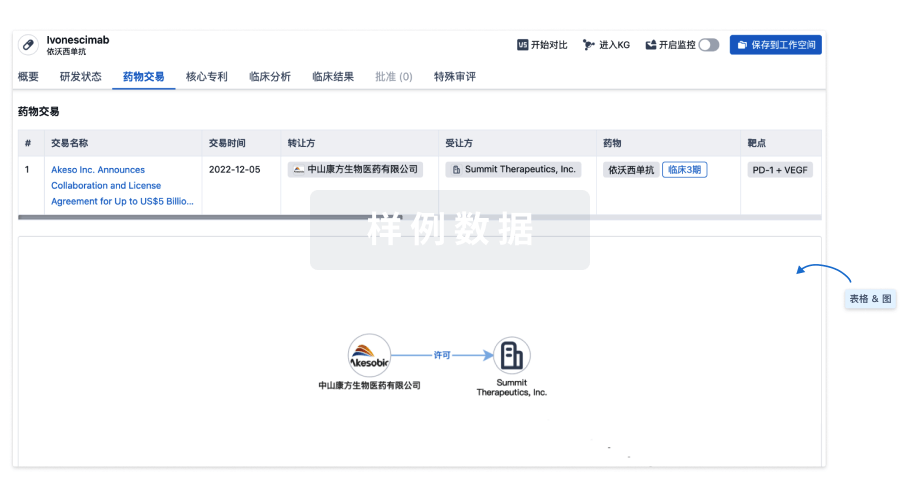
药物交易
使用我们的药物交易数据加速您的研究。
登录
或
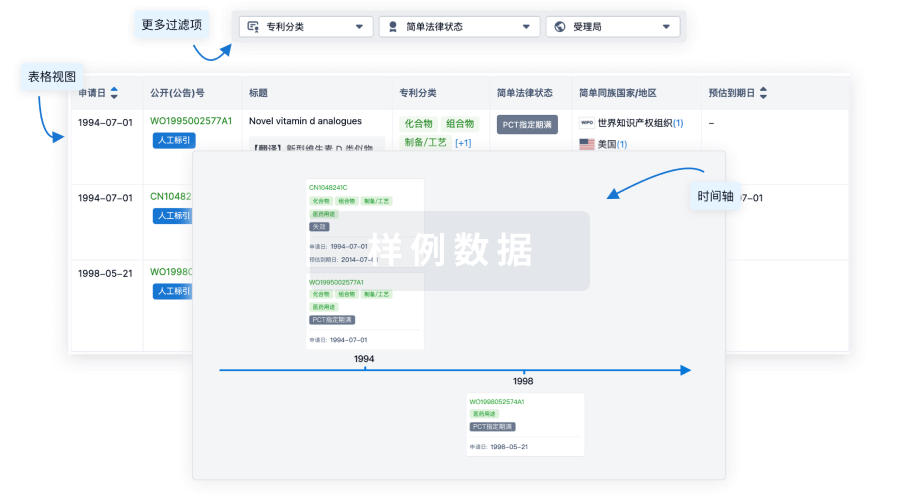
核心专利
使用我们的核心专利数据促进您的研究。
登录
或
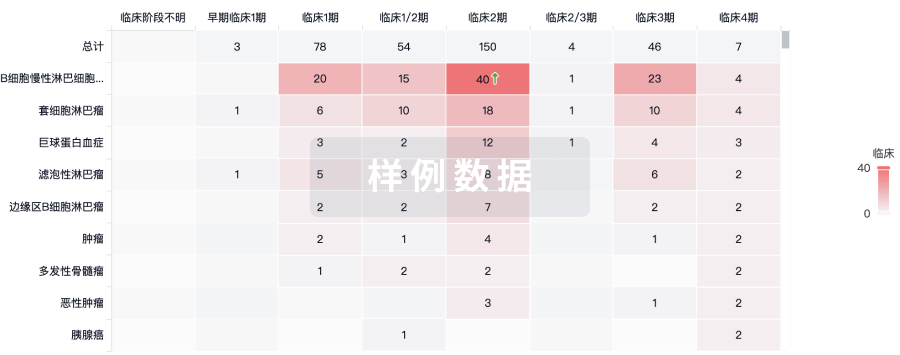
临床分析
紧跟全球注册中心的最新临床试验。
登录
或
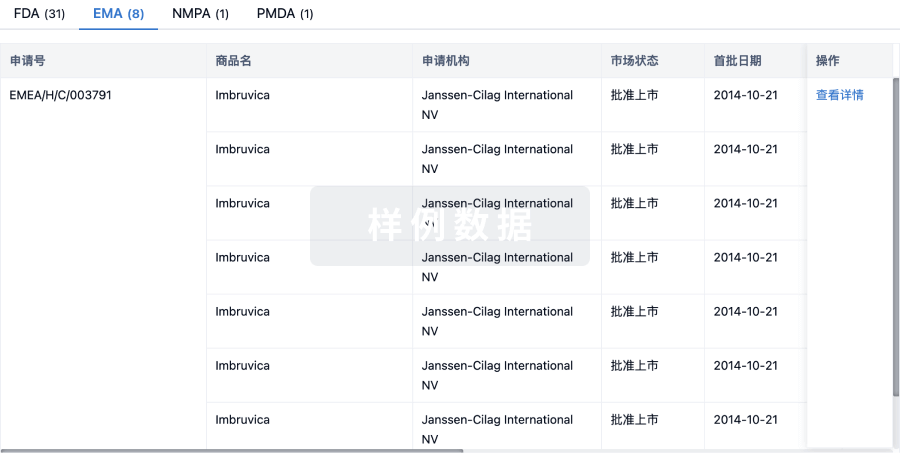
批准
利用最新的监管批准信息加速您的研究。
登录
或
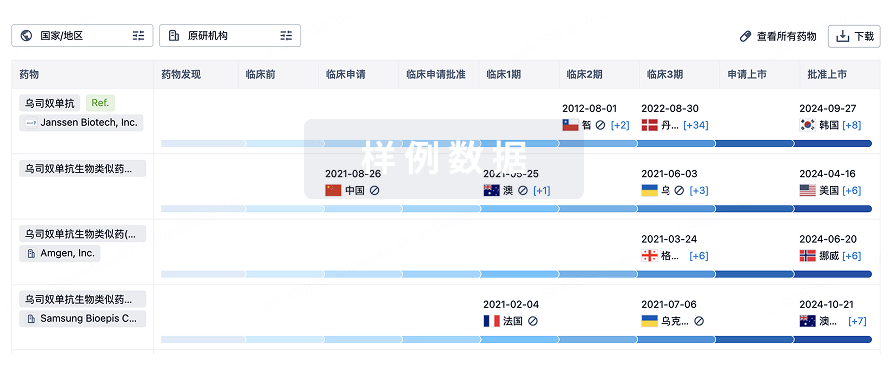
生物类似药
生物类似药在不同国家/地区的竞争态势。请注意临床1/2期并入临床2期,临床2/3期并入临床3期
登录
或
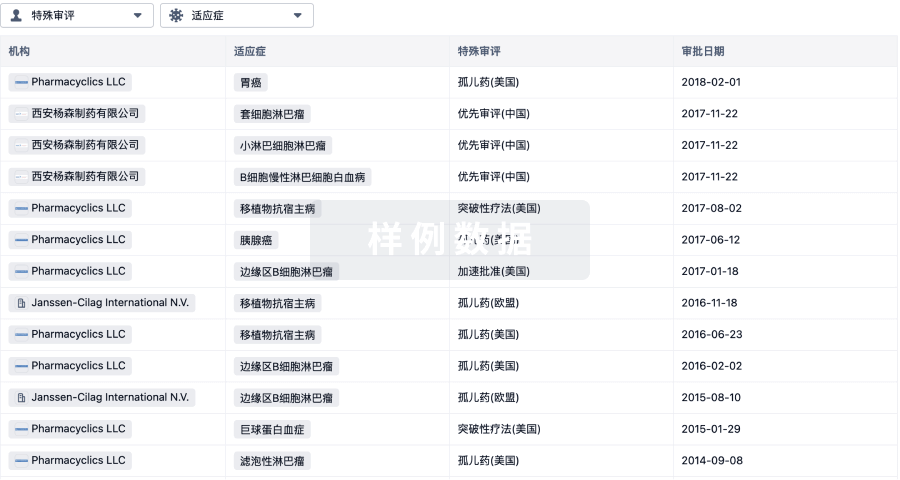
特殊审评
只需点击几下即可了解关键药物信息。
登录
或
提出任何生物医药研究问题
让每一步生物医药决策都精准制胜
基于十亿级生物数据与全球情报的精准 AI,赋能早期药物发现
立即开始免费试用!
智慧芽新药情报库是智慧芽专为生命科学人士构建的基于AI的创新药情报平台,助您全方位提升您的研发与决策效率。
立即接入生物医药数据包
智慧芽新药库数据也通过智慧芽开放平台,以MCP或API服务形式对外开放。立即使用我们的MCP服务定制您的LLM智能体。
生物序列数据库
生物药研发创新
免费使用
化学结构数据库
小分子化药研发创新
免费使用