预约演示
更新于:2026-08-22
ETX-636
更新于:2026-08-22
概要
基本信息
药物类型 小分子化药 |
别名 PI3Kα inhibitor(ENSEM Therapeutics)、Mutant PI3Kα(昂胜医药)、ETX 636 + [2] |
靶点 |
作用方式 降解剂、抑制剂 |
作用机制 PI3Kα 降解剂(磷脂酰肌醇3-激酶α 降解剂)、PI3Kα抑制剂(磷脂酰肌醇3-激酶α抑制剂) |
非在研适应症- |
非在研机构- |
权益机构- |
最高研发阶段临床1/2期 |
首次获批日期- |
最高研发阶段(中国)临床1/2期 |
特殊审评快速通道 (美国) |

登录后查看时间轴
关联
1
项与 ETX-636 相关的临床试验NCT06993844
A Phase 1/2, Open-label, First-in-human Study of the Safety, Tolerability, Pharmacokinetics, and Preliminary Efficacy of ETX-636, a Pan-mutant-selective PI3Kα Inhibitor, as Monotherapy and in Combination With Other Anticancer Therapies in Participants With Advanced Solid Tumors
100 项与 ETX-636 相关的临床结果
登录后查看更多信息
100 项与 ETX-636 相关的转化医学
登录后查看更多信息
100 项与 ETX-636 相关的专利(医药)
登录后查看更多信息
68
项与 ETX-636 相关的文献(医药)2026-08-01BIOORGANIC CHEMISTRY
Design, synthesis, and anti-colorectal cancer activity of quinoxalines with improved drug-like properties
Article
作者: Ran, Yunsheng ; Zhang, Ji-Quan ; Chai, Yue'e ; Li, Honglang ; Jiang, Yunfang ; Yang, Hu ; Chen, Rui ; Zhu, Chaoran ; Huang, Jing ; Ouyang, Weiwei
Colorectal cancer (CRC) is strongly associated with aberrant activation of the PI3K/Akt/mTOR pathway, in which PI3Kα represents a clinically validated therapeutic target. Herein, we report the rational design, synthesis, and biological evaluation of quinoxaline derivatives as potent PI3Kα selective inhibitors derived from the lead compound 18a, which was developed in our previous study and suffered from poor drug-like properties. Structure-guided modification led to the identification of compound 8b, which exhibited remarkably improved solubility and oral bioavailability, and it showed nano-mol level inhibitory activity against PI3Kα. In HCT-116 cells, 8b effectively suppressed proliferation, migration, and colony formation, induced apoptosis, and selectively triggered G2/M-phase arrest via downregulation of Cyclin B1 and CDK1. Mechanistic studies further confirmed robust inhibition of PI3K/Akt/mTOR signaling pathway and associated transcriptional reprogramming. Collectively, 8b represents a promising orally active PI3Kα inhibitor for CRC targeted therapy.
2026-05-02Analytical and Bioanalytical Chemistry
Screening-confirmation approach for urinary alpelisib by silver-nanorod enabled portable SERS platform and LC-MS validation.
Article
作者: Ríos, Ángel ; de Andrés, Fernando ; López-Sánchez, Claudia ; Zougagh, Mohammed
Alpelisib, a selective PI3Kα inhibitor, benefits from reliable quantitative measurements to support exposure assessment and dose individualization. Here, we report a portable surface-enhanced Raman spectroscopy (SERS) workflow for rapid urinary screening and quantification of alpelisib using shaped-controlled silver nanoparticles, with silver nanorods selected as the substrate providing the highest SERS response among spherical, cubic, and rod-like morphologies. Key substrate-preparation and instrumental parameters were systematically optimized using a portable 785-nm Raman device, and the analytical figures of merit were thoroughly assessed in urine following a sample clean-up by protein precipitation and liquid-liquid extraction. Under optimized conditions, the diagnostic band at 993 cm⁻1 was adopted for quantification, and the method provided a linear response from 7.93 to 113.26 µM (R2 = 0.9993), with limits of detection and quantification of 2.28 µM and 7.61 µM, respectively. Precision was suitable for a rapid SERS workflow (repeatability and reproducibility RSD ≤ 8.71% and ≤ 8.25%, respectively), with accuracy close to 100% across quality-control levels. A selectivity assessment was performed in urine using an equimolar alpelisib mixture with representative pharmaceutical interferents, and the method reliability was further supported by LC-MS benchmarking, with no statistically significant differences between SERS and LC-MS results for calibration and QC samples at the 95% confidence level (two-tailed t-test). An apparent enhancement factor up to 103 was estimated for the 993 cm⁻1 band under the selected conditions, consistent with a predominantly electromagnetic enhancement mechanism with a plausible interfacial chemical contribution. Finally, method sustainability was discussed using the AGREE metric (overall score 0.74/1.00) as a diagnostic tool to identify improvement hotspots. Overall, this portable SERS approach provides a practical, low-instrumentation option for rapid urinary screening and quantification of alpelisib, complementary to LC-MS-based methods for comprehensive bioanalysis.
2026-05-01JOURNAL OF MOLECULAR GRAPHICS & MODELLING
Discovery of a novel PI3Kα inhibitor for breast cancer therapy via virtual screening method, molecular dynamics simulation and biological evaluation
Article
作者: Nutho, Bodee ; Rajchakom, Chananya ; Boonma, Thitiya ; Kanjanasirirat, Phongthon ; Nunthaboot, Nadtanet
Phosphatidylinositol-4,5-bisphosphate 3-kinase alpha (PI3Kα) is a central signaling enzyme driving cell proliferation and growth in cancers including breast cancer. Selective inhibition of PI3Kα isoform has become a promising therapeutic approach. In this work, 2000 in-house natural compounds were virtually screened against the ATP-binding site of PI3Kα. Of these, 618 compounds were predicted to have acceptable drug-likeness, pharmacokinetic, and toxicity properties based on in silico ADMET screening. Docking analysis highlighted four candidates forming stable hydrogen bonds with key residues V851, S854, and Q859 in the PI3Kα binding pocket. Molecular dynamics simulations were then used to assess their structural features and dynamic stability. Hit 2 was found to form strong hydrogen bonds with E849 and V851 of the PI3Kα protein. MM/GBSA-based binding free energy analysis supported that Hit 2 possessed the most favorable binding affinity to PI3Kα among the identified candidates. In vitro cytotoxicity assays were then performed in MCF-7 and MDA-MB-231 breast cancer cell lines, with alpelisib as a reference compound. Hit 2 reduced cell viability in both cell lines, but its effect was particularly pronounced in MDA-MB-231 cells, a model of triple-negative breast cancer (TNBC). These results suggest that Hit 2 represents a promising natural scaffold for further design and development in breast cancer therapy, with particular relevance for aggressive TNBC.
64
项与 ETX-636 相关的新闻(医药)2026-08-16
·信狐药迅
100 项与 ETX-636 相关的药物交易
登录后查看更多信息
研发状态
10 条进展最快的记录, 后查看更多信息
登录
| 适应症 | 最高研发状态 | 国家/地区 | 公司 | 日期 |
|---|---|---|---|---|
| 晚期恶性实体瘤 | 临床2期 | 美国 | 2025-06-10 | |
| HR阳性/HER2阴性乳腺癌 | 临床2期 | 美国 | 2025-06-10 | |
| HR阳性/HER2阴性乳腺癌 | 临床2期 | 中国 | 2025-06-10 | |
| PIK3CA阳性实体瘤 | 临床申请批准 | 中国 | 2025-11-20 |
登录后查看更多信息
临床结果
临床结果
适应症
分期
评价
查看全部结果
登录后查看更多信息
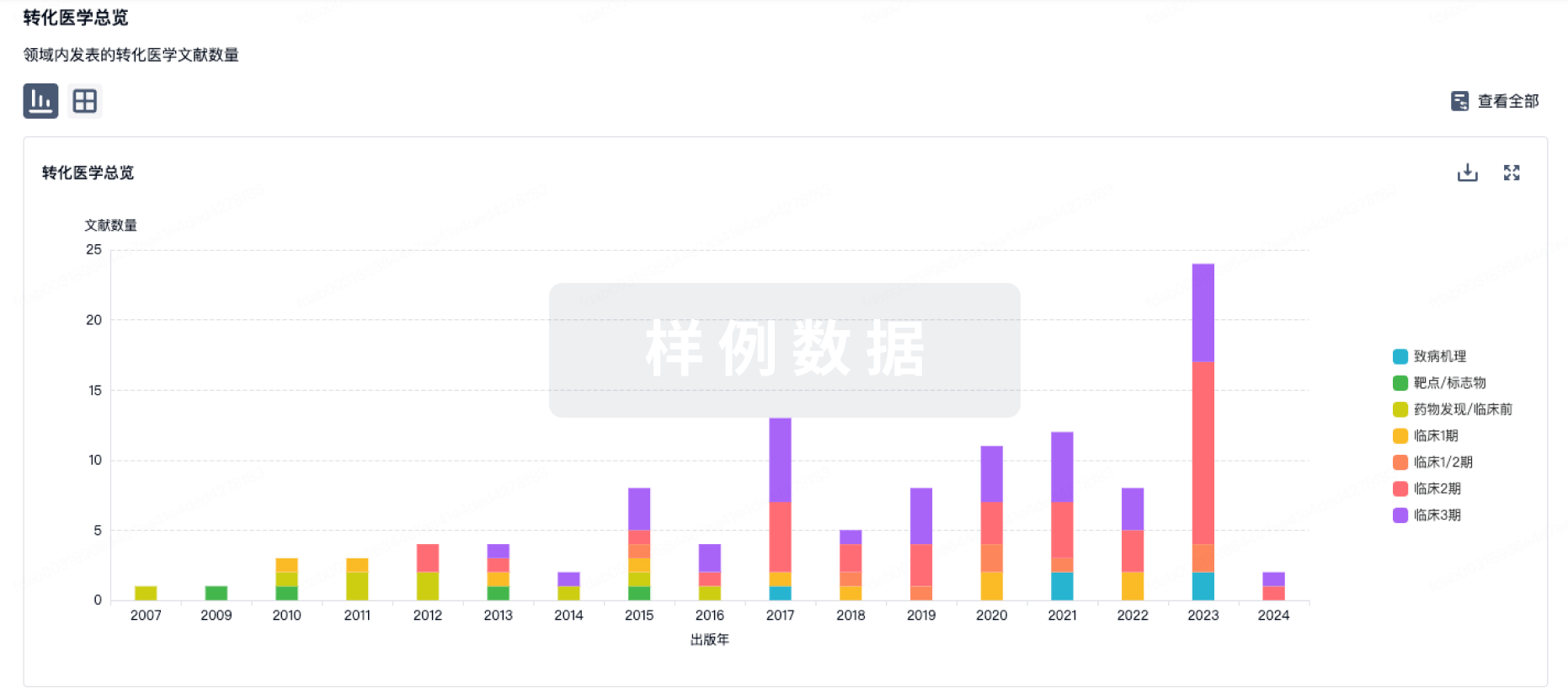
转化医学
使用我们的转化医学数据加速您的研究。
登录
或
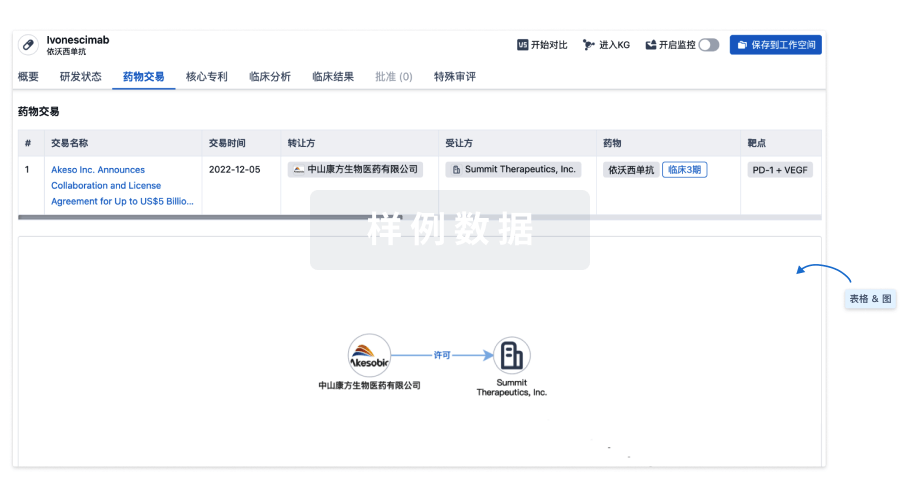
药物交易
使用我们的药物交易数据加速您的研究。
登录
或
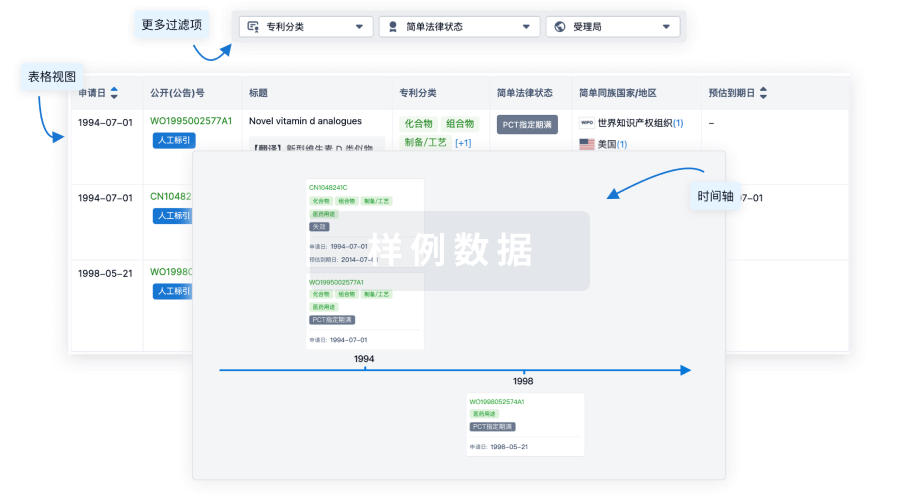
核心专利
使用我们的核心专利数据促进您的研究。
登录
或
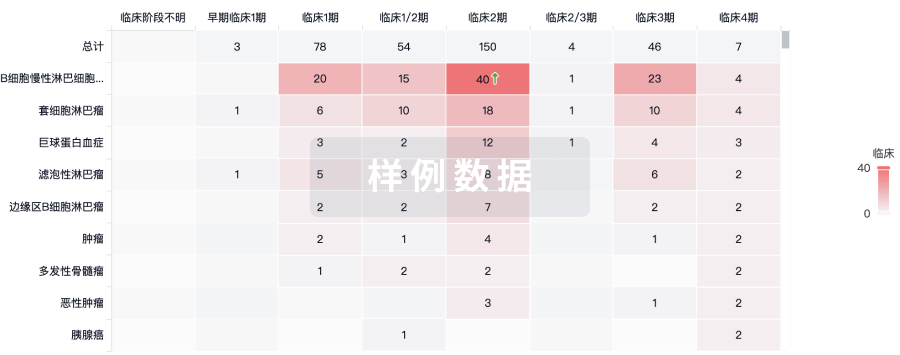
临床分析
紧跟全球注册中心的最新临床试验。
登录
或
批准
利用最新的监管批准信息加速您的研究。
登录
或
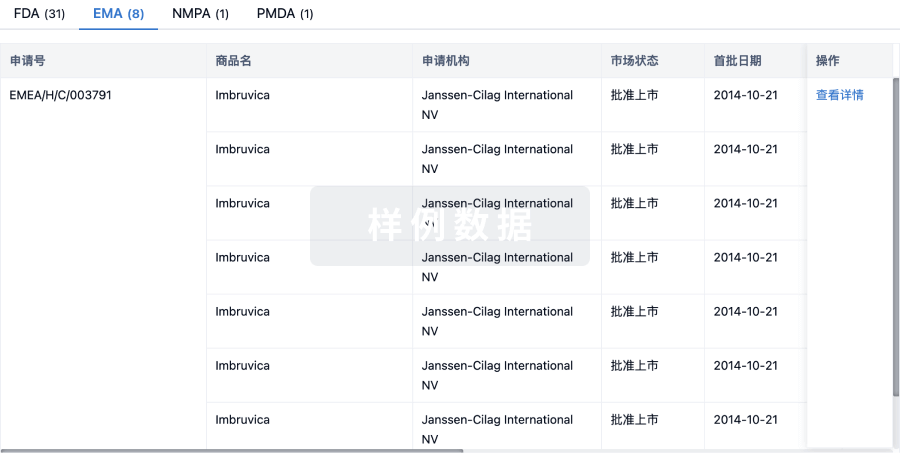
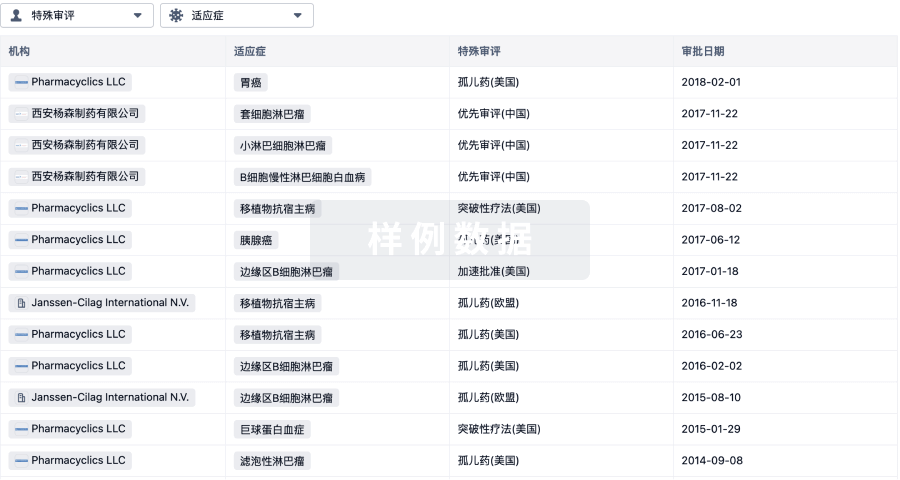
特殊审评
只需点击几下即可了解关键药物信息。
登录
或
提出任何生物医药研究问题
让每一步生物医药决策都精准制胜
基于十亿级生物数据与全球情报的精准 AI,赋能早期药物发现
立即开始免费试用!
智慧芽新药情报库是智慧芽专为生命科学人士构建的基于AI的创新药情报平台,助您全方位提升您的研发与决策效率。
立即接入生物医药数据包
智慧芽新药库数据也通过智慧芽开放平台,以MCP或API服务形式对外开放。立即使用我们的MCP服务定制您的LLM智能体。
生物序列数据库
生物药研发创新
免费使用
化学结构数据库
小分子化药研发创新
免费使用