预约演示
更新于:2026-08-22
Recombinant Human Fibroblast Growth Factor-2(SVS Institute of Dental Sciences)
更新于:2026-08-22
概要
基本信息
药物类型 生长因子 |
别名 rhFGF-2 |
作用方式 刺激剂 |
作用机制 FGFR1刺激剂(成纤维细胞生长因子受体-1刺激剂)、FGFR2刺激剂(成纤维细胞生长因子受体-2刺激剂) |
治疗领域 |
在研适应症- |
在研机构- |
权益机构- |
最高研发阶段无进展早期临床1期 |
首次获批日期- |
最高研发阶段(中国)- |
特殊审评- |
登录后查看时间轴
关联
2
项与 Recombinant Human Fibroblast Growth Factor-2(SVS Institute of Dental Sciences) 相关的临床试验NCT04361630
Recombinant Human Fibroblast Growth Factor-2 (rhFGF-2) In Absorbable Collagen Membrane With Coronally Advanced Flap In Class I And II Gingival Recession Defects -A Randomized Control Trial
This study was a single-arm trial to obtain preliminary data on the efficacy of collagen membranes impregnated with recombinant human fibroblast growth factor (rhFGF-2) in the treatment of Miller's class I and class II gingival recessions.
开始日期2019-05-01 |
JPRN-UMIN000023208
Use of an Injectable Complex of Beta-Phosphate Granules, Hyaluronate, and Fibroblast Growth Factor-2 on Repair of Fracture with Bone Defects.
开始日期2016-03-04 |
申办/合作机构- |
100 项与 Recombinant Human Fibroblast Growth Factor-2(SVS Institute of Dental Sciences) 相关的临床结果
登录后查看更多信息
100 项与 Recombinant Human Fibroblast Growth Factor-2(SVS Institute of Dental Sciences) 相关的转化医学
登录后查看更多信息
100 项与 Recombinant Human Fibroblast Growth Factor-2(SVS Institute of Dental Sciences) 相关的专利(医药)
登录后查看更多信息
100
项与 Recombinant Human Fibroblast Growth Factor-2(SVS Institute of Dental Sciences) 相关的文献(医药)2026-03-15·Zhongguo xiu fu chong jian wai ke za zhi = Zhongguo xiufu chongjian waike zazhi = Chinese journal of reparative and reconstructive surgery
[Advances in application of hydrogels for treatment of osteonecrosis of the femoral head].
Review
作者: Wang, Qin ; Kang, Pengde ; Li, Qianhao ; Han, Guangtao
Objective:
To summarize recent research advances of hydrogels for the treatment of osteonecrosis of the femoral head (ONFH).
Methods:
The literature on hydrogels for treatment of ONFH at home and abroad in recent years was extensively reviewed, and the fundamental research and clinical application were summarized and analyzed.
Results:
In the field of fundamental research, functionalized hydrogels (including thermosensitive, oxygen-controlled release, and ion-doped types) demonstrate significant advantages in achieving targeted delivery, controlled release, and microenvironment regulation. Particularly, the development of novel material systems, such as composite scaffold systems, gene-activated hydrogels, and engineered exosomes, has further enhanced treatment precision and biological efficacy. In terms of clinical application, the materials like recombinant human fibroblast growth factor 2 (rhFGF-2) gelatin hydrogels have been validated in multiple trials, showing promising joint preservation rates and bone regeneration capabilities. This opens a promising new clinical pathway for hip-preserving treatment of ONFH. Among these, hydrogel-based multilevel composite scaffolds represent the most promising materials for clinical translation.
Conclusion:
Hydrogel systems, by synergistically regulating osteogenesis, angiogenesis, and immunomodulation, and leveraging the unique advantages of functionalized materials in precise drug control and microenvironment regulation, have evolved into advanced platforms for the comprehensive treatment of ONFH. Among them, rhFGF-2 gelatin hydrogels, with their remarkable clinical efficacy, offer a new strategy of significant translational value for hip-preserving therapy.
2026-03-01·Clinical Advances in Periodontics
Saving a hopeless tooth with a four‐wall bone defect: A case report
Article
作者: Iwata, Tomoyuki ; Ouhara, Kazuhisa ; Nagahara, Takayoshi ; Kono, Shoko ; Wada, Keinoshin ; Mizuno, Noriyoshi ; Ueda, Tomoya
Abstract:
Background:
Recombinant human fibroblast growth factor‐2 (rhFGF‐2) has been shown to effectively promote the formation of new periodontal tissues, and its efficacy has been demonstrated in clinical settings. Moreover, the clinical and radiographic outcomes in the treatment of periodontal infrabony defects can be improved by using rhFGF‐2 in combination with a bone substitute. Here, we present a case of four‐wall bone defect in a tooth treated by combination regenerative therapy using rhFGF‐2 and beta‐tricalcium phosphate (βo‐TCP).
Methods:
A 43‐year‐old male with a four‐wall bone defect in tooth #28 was subjected to combination therapy with rhFGF‐2 and β‐TCP. Periodontal clinical parameters and radiographic images were evaluated at the first visit, after the initial periodontal treatment, and after 4 months and 4 years postoperation.
Results:
Although gingival recession and nonvital pulp were observed postoperation, improvements in the periodontal parameters and radiographic outcomes were subsequently recorded.
Conclusion:
Periodontal regenerative therapy with a combination of rhFGF‐2 and β‐TCP showed great potential in the treatment of four‐wall bone defects of teeth.
Key points:
Periodontal regenerative therapy using recombinant human fibroblast growth factor‐2 (rhFGF‐2) and beta‐tricalcium phosphate (β‐TCP) showed immense potential in the treatment of four‐wall bone defect in teeth.In addition to using computed tomography for assessing bone defects and root morphologies, an evaluation of root canal morphology and pulp diagnosis is essential for understanding the internal and external aspects of the defect, which would aid in tooth preservation.Appropriate periodontal and endodontic treatments enabled tooth preservation following apical periodontitis after periodontal regenerative therapy.
Plain language summary:
This case report focuses on a new approach for the treatment of a four‐wall bone defect, a significant dental issue in which the bone around the tooth is damaged, thereby decreasing the stability of the tooth. We treated a 43‐year‐old male patient with a combination of two key components: the growth factor rhFGF‐2, which helps promote the growth of new tissues, and the synthetic bone graft substitute β‐TCP, which acts as a substitute for the missing bone. Over the course of 4 years, we monitored the patient's progress using dental exams and X‐ray photos. Despite some minor side effects, such as gum recession and the loss of tooth vitality, the overall condition of the tooth and surrounding bone showed significant improvement. This combination therapy shows promise in repairing similar bone defects, which would help save teeth that might otherwise be lost.
2026-03-01·Clinical Advances in Periodontics
Modified nonincised papillae surgical approach: Minimally invasive technique for periodontal regeneration
Article
作者: Suzuki, Eiichi ; Katayama, Akihiko ; Funato, Akiyoshi ; Rasperini, Giulio
Abstract:
Background:
Nonincised papillae surgical approach (NIPSA) preserves papillae by placing incision lines away from interdental areas, achieving good outcomes. However, these techniques may be unsuitable in cases with bone defect morphology or tissue anatomy. This case series introduces the modified nonincised papillae surgical approach (M‐NIPSA), which preserves papillae while providing adequate access for periodontal defect debridement and regenerative material placement.
Methods:
Ten intrabony defects were treated with M‐NIPSA using recombinant human fibroblast growth factor‐2 and carbonate apatite (CO3Ap) as regenerative materials. Clinical parameters were assessed at baseline and 6 and 12 months. Early wound healing index evaluated primary wound closure 7 days postoperatively.
Results:
All cases achieved complete flap closure without wound dehiscence, with significant probing pocket depth and clinical attachment level (CAL) improvements compared to baseline (mean CAL gain: 3.65 ± 1.20 mm). No significant changes in gingival recession or keratinized tissue were observed.
Conclusions:
M‐NIPSA overcomes anatomical limitations of conventional techniques, ensuring primary healing with minimal incision and flap reflection. Combined with effective growth factors, it significantly improves periodontal parameters.
Key points:
Modified nonincised papillae surgical approach allows access to bone defects with a shorter incision range and reduced invasiveness by positioning the incision line more coronally compared to conventional nonincised papillae surgical approach.Ensuring an adequate width of keratinized gingiva (keratinized tissue width ≥3 mm) is essential. Incisions and flap elevation should minimize damage to the gingival tissue, and sutures with fine threads must be used to preserve blood flow.This incision technique is not suitable in cases with fragile gingiva due to inflammation or extensive bone defects spanning multiple teeth that could compromise blood flow.
Plain language summary:
This case series introduces a new surgical incision design for periodontal regeneration. Periodontitis, a disease that damages gum and bone, has long been treated with regeneration surgeries to restore lost tissues. Advances in materials and surgical methods have improved the predictability and effectiveness of these treatments. Recently, techniques have been developed to minimize surgical invasion and enhance healing. One innovation is avoiding incisions and tissue separating in the interdental area, preserving blood flow and keeping space for bone regeneration. In this study, the new incision design was applied to 10 patients undergoing periodontal regeneration therapy. After 12 months, evaluations showed improved soft and hard tissue healing. The results suggest that this new design addresses some anatomical limitations of traditional methods, offering effective healing with minimal surgical damage. Based on the results, this approach suggests the potential for faster recovery and better long‐term outcomes by combining precision and reduced invasiveness.
100 项与 Recombinant Human Fibroblast Growth Factor-2(SVS Institute of Dental Sciences) 相关的药物交易
登录后查看更多信息
研发状态
10 条进展最快的记录, 后查看更多信息
登录
| 适应症 | 最高研发状态 | 国家/地区 | 公司 | 日期 |
|---|---|---|---|---|
| 牙龈退缩 | 临床1期 | 印度 | 2019-05-01 | |
| 牙周炎 | 临床1期 | 印度 | 2019-05-01 |
登录后查看更多信息
临床结果
临床结果
适应症
分期
评价
查看全部结果
| 研究 | 分期 | 人群特征 | 评价人数 | 分组 | 结果 | 评价 | 发布日期 |
|---|
No Data | |||||||
登录后查看更多信息
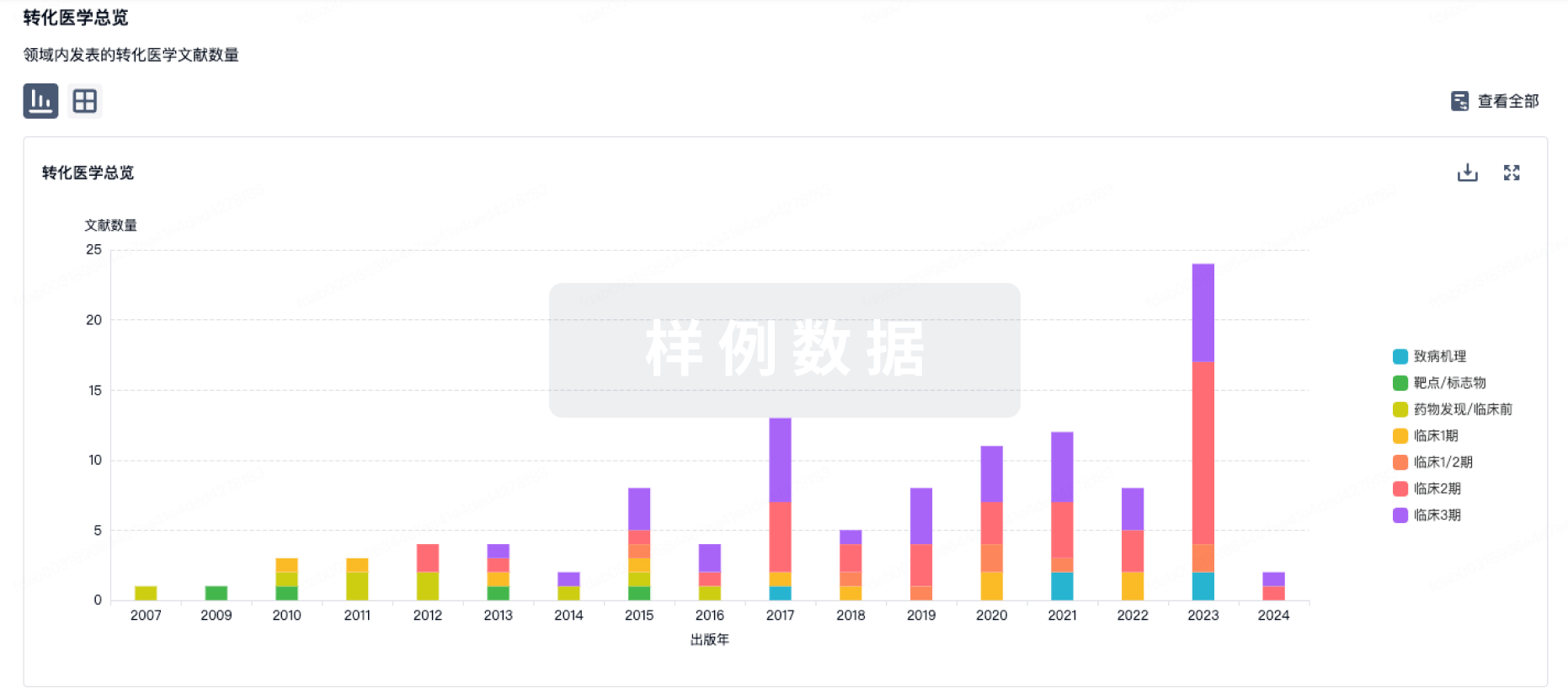
转化医学
使用我们的转化医学数据加速您的研究。
登录
或
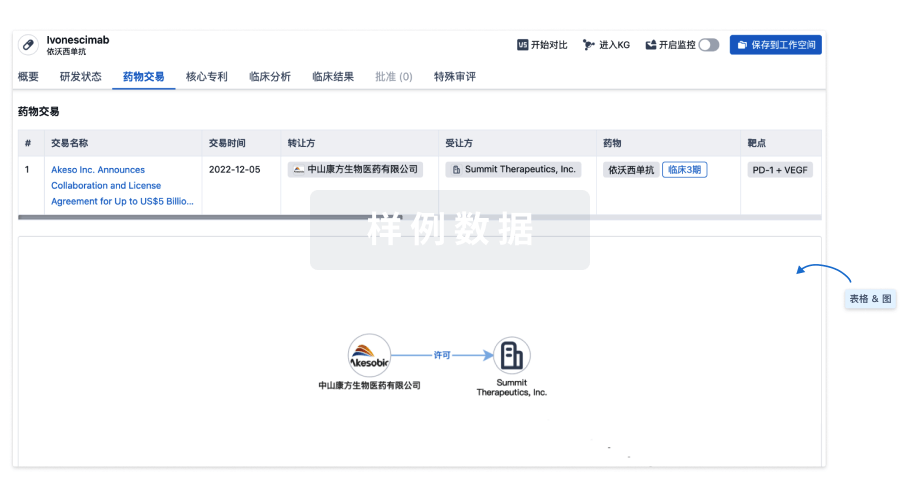
药物交易
使用我们的药物交易数据加速您的研究。
登录
或
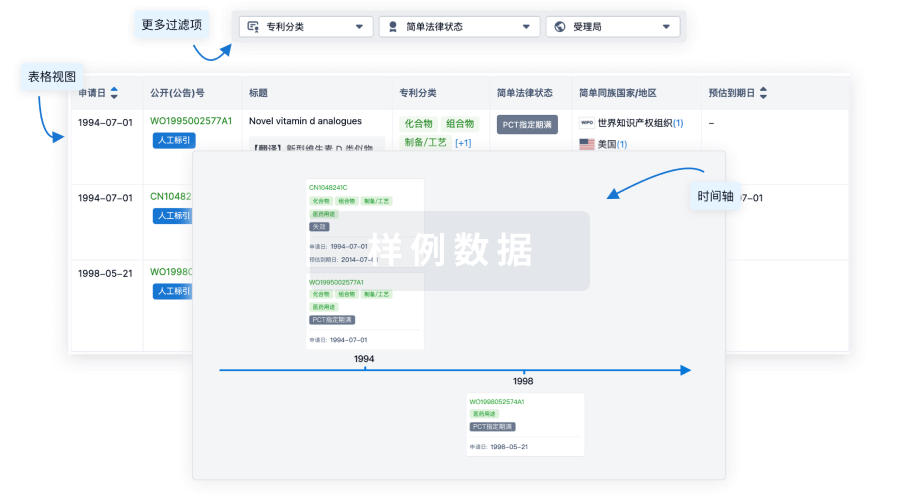
核心专利
使用我们的核心专利数据促进您的研究。
登录
或
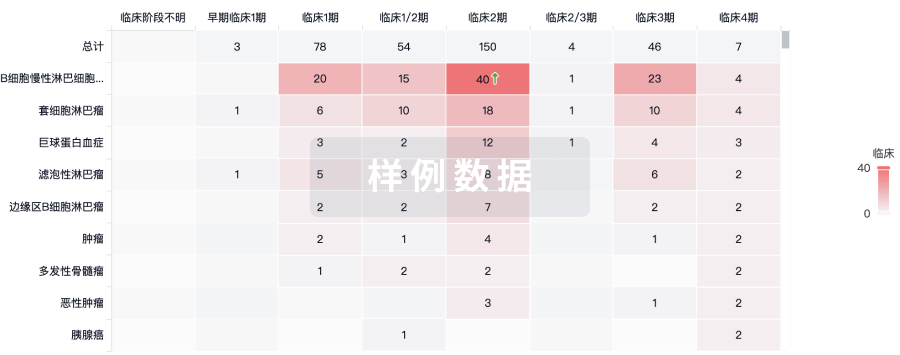
临床分析
紧跟全球注册中心的最新临床试验。
登录
或
批准
利用最新的监管批准信息加速您的研究。
登录
或
生物类似药
生物类似药在不同国家/地区的竞争态势。请注意临床1/2期并入临床2期,临床2/3期并入临床3期
登录
或
特殊审评
只需点击几下即可了解关键药物信息。
登录
或
提出任何生物医药研究问题
让每一步生物医药决策都精准制胜
基于十亿级生物数据与全球情报的精准 AI,赋能早期药物发现
立即开始免费试用!
智慧芽新药情报库是智慧芽专为生命科学人士构建的基于AI的创新药情报平台,助您全方位提升您的研发与决策效率。
立即接入生物医药数据包
智慧芽新药库数据也通过智慧芽开放平台,以MCP或API服务形式对外开放。立即使用我们的MCP服务定制您的LLM智能体。
生物序列数据库
生物药研发创新
免费使用
化学结构数据库
小分子化药研发创新
免费使用