预约演示
更新于:2026-08-19

Xiamen Innovax Biotech Co., Ltd.
更新于:2026-08-19
概览
标签
感染
肿瘤
消化系统疾病
预防性疫苗
病毒样颗粒疫苗
多价疫苗
疾病领域得分
一眼洞穿机构专注的疾病领域
技术平台
公司药物应用最多的技术
靶点
公司最常开发的靶点

暂无数据
关联
靶点 |
作用机制 |
在研机构 |
原研机构 |
在研适应症 |
非在研适应症 |
最高研发阶段 |
首次获批国家/地区 |
首次获批日期 |
靶点 |
作用机制 |
在研机构 |
原研机构 |
在研适应症 |
非在研适应症 |
最高研发阶段 |
首次获批国家/地区 |
首次获批日期 |

靶点 |
作用机制 |
在研机构 |
原研机构 |
在研适应症 |
非在研适应症 |
最高研发阶段 |
首次获批国家/地区 |
首次获批日期 |
NCT07668271
A Single-center, Randomized, Double-blind, Phase IV Lot-to-lot Consistency Clinical Trial in 18-30 Years-old Females in China to Evaluate Immunogenicity and Safety of Recombinant Human Papillomavirus 9-valent (Types 6/11/16/18/31/33/45/52/58) Vaccine (Escherichia Coli)
NCT07525245
A Study on the Effectiveness of Large Language Model-Based Chatbot Interventions Among Parents of Junior High School Girls in Improving Human Papillomavirus (HPV) Vaccine Awareness, Intention and Vaccination Rates

NCT06866574
A Multicenter, Randomized, Double-Blind, Aluminum Adjuvant-Controlled Phase III Clinical Trial to Evaluate the Efficacy, Immunogenicity, and Safety of a Recombinant Human Papillomavirus 9-Valent (Types 6, 11, 16, 18, 31, 33, 45, 52, 58) Vaccine (E. Coli) in Chinese Males Aged 18 to 45 Years
100 项与 厦门万泰沧海生物技术有限公司 相关的临床结果
登录后查看更多信息
登录后查看更多信息
2026-08-01ACTA TROPICA
Dose- and time-dependent dissemination of viable Leishmania amazonensis following experimental footpad infection in mice
Article
作者: Quan, Fu-Shi ; Yoon, Keon-Woong ; Kim, Sung Soo ; Mao, Jie ; Chu, Ki-Back ; Nam, Hyeon-Woo ; Singh, Manish Kumar ; Heo, Su In ; Lee, Ji-Hyun ; Eom, Gi-Deok
Cutaneous leishmaniasis is typically characterized by localized skin lesions, but the extent to which Leishmania amazonensis disseminates beyond the primary site of infection remains incompletely defined. In this study, BALB/c mouse footpads were infected subcutaneously with L. amazonensis promastigotes at doses ranging from 105 to 108, and infection was evaluated over time up to 120 days. All infected groups developed local footpad infection, and amastigotes were detectable at the infection site early after challenge. Footpad swelling and parasite burden increased progressively, with more pronounced local lesion development observed at higher infective doses. At an infective dose of 1 × 10⁶, viable parasites were recovered predominantly from the footpad and bone marrow, with only limited detection in the spleen at later time points. In contrast, infection with 1 × 10⁸ promastigotes resulted in broader dissemination, with viable parasites detected in the bone marrow and spleen and, at later stages of infection, in the liver and peripheral blood. Parasite-specific IgG, IgG1, and IgG2a antibody responses were also higher in the 1 × 10⁸ infection group than in the 1 × 10⁶ group. These findings show that experimental L. amazonensis infection is not uniformly restricted to the skin and that viable parasite dissemination to non-cutaneous tissues is influenced by inoculum size and infection duration.
2027-12-31ACS Infectious Diseases
Influenza Virus-Like Particles Displaying
Leishmania donovani
Promastigote Surface Antigen Induce Cross-Protective Immunity
Article
作者: Yoon, Keon-Woong ; Quan, Fu-Shi ; Heo, Su In ; Kim, Sung Soo ; Mao, Jie ; Chu, Ki Back ; Nam, Hyeon-Woo ; Eom, Gi-Deok ; Singh, Manish Kumar ; Lee, Ji-Hyun
Virus-like particles expressing the Promastigote surface antigen (PSA) of Leishmania donovani have shown great potential as a vaccine candidate against L. donovani infection. However, their potential as a cross-protective leishmaniasis vaccine candidate has remained unexplored. In this study, we generated the L. donovani PSA-expressing influenza virus-like particle vaccines and evaluated their cross-protective potential against Leishmania amazonensis infection in mice. Virus-like particles expressing the L. donovani PSA on influenza M1 protein (LdPSA-VLP) were self-assembled in insect cells using the baculovirus expression system. To evaluate the efficacy of our LdPSA-VLP vaccine, mice were subcutaneously immunized and then challenged with virulent L. amazonensis. LdPSA-VLP immunization elicited L. amazonensis antigen-specific IgG antibodies. Upon challenge infection with mCherry-expressing L. amazonensis, L. amazonensis-specific antibody-secreting cell responses, germinal center B cell, memory B cell, and CD4+/CD8+ T cell responses were markedly enhanced in immunized mice. Footpad inflammation was significantly inhibited, as indicated by decreased proinflammatory cytokine production. LdPSA-VLP provided cross-protection against L. amazonensis by reducing footpad swelling and parasite burden in the footpads. Our findings indicate that LdPSA-VLPs could serve as promising cross-protective vaccine candidates against cutaneous leishmaniasis.
2025-08-01Lancet Regional Health-Western Pacific
Long-term efficacy and immunopersistence of an Escherichia coli-produced HPV-16/18 bivalent vaccine: an observational extension study following a randomised, double-blind Phase III clinical trial cohort
Article
作者: Zhang, Jun ; Zheng, Fengxian ; Zhao, Fanghui ; Wu, Ting ; Hu, Shangying ; Bi, Zhaofeng ; Li, Yufei ; Wang, Zhe ; Ke, Lidong ; Jia, Xinhua ; Qiao, Youlin ; Li, Mingzhu ; Zhao, Chao ; Pan, Qinjing ; Wei, Lihui ; Li, Caihong ; Huang, Shoujie ; Liu, Xiaoli ; Nie, Lingling ; Dai, Cuihong ; Chen, Qi ; Quan, Jiali ; Qiu, Lingxian ; Su, Yingying ; Yin, Jian ; Huang, Weijin ; Xia, Ningshao ; Kuang, Xuefeng ; Zhang, Qiufen ; Zhang, Xun
Background:
A safe and highly efficacious Escherichia coli-produced HPV-16/18 bivalent vaccine (Cecolin®) offers a cost-effective cervical cancer prevention measure. Here, we report data on the long-term efficacy and immunopersistence up to 10 years post-vaccination.
Methods:
In the Phase III clinical trial (NCT01735006), 7372 women were enrolled and randomly assigned to receive the HPV or control vaccine (hepatitis E vaccine). Women from 2 sites (Xinmi City and Fengning County; N = 1986) were invited to participate in the extension study. Cervical samples were collected for ThinPrep Pap tests and HPV DNA testing. Serum samples from participants in the immune persistent subcohort (N = 300) were collected for neutralising antibody testing. The co-primary outcomes were high-grade cervical, vulvar or vaginal lesions and persistent infection (over 6 months) associated with HPV 16/18 in the per-protocol population.
Findings:
A total of 1648 women participated in the extension study (806 from the vaccine group and 842 from the control group). Over a median 10.2-year follow-up, vaccine efficacy was 87.5% (95% CI 6.4-99.7) against high-grade cervical, vulvar or vaginal lesions (1 case in the vaccine group and 8 cases in the control group, P = 0.0391), and 97.0% (95% CI 78.9-100.0) against persistent infection (over 6 months, 1 case in the vaccine group and 32 cases in the control group, P < 0.0001) in the per-protocol population. The GMCs of neutralising antibodies peaked by month 7, declined through month 42, with HPV-16 plateauing and HPV-18 continuing to decline thereafter. At 114 months, 98.9% (93/94) of baseline seronegative participants remained seropositive for HPV-16 with the GMC of 61.84 IU/mL and 97.0% (98/101) remained seropositive for HPV-18 with the GMC of 18.73 IU/mL.
Interpretation:
The E. coli-produced HPV 16/18 bivalent vaccine elicits sustained antibody responses and confers durable protection against HPV 16/18 associated high-grade cervical, vulvar or vaginal lesions and persistent infections for a minimum of 10 years post-vaccination.
Funding:
National Key Research and Development Program of China (2023YFC2307602), National Natural Science Foundation of China (823B2086, 82273640), Beijing Natural Science Foundation (L244091), and Fundamental Research Funds for the Central Universities (20720220005).
100 项与 厦门万泰沧海生物技术有限公司 相关的药物交易
登录后查看更多信息
100 项与 厦门万泰沧海生物技术有限公司 相关的转化医学
登录后查看更多信息
组织架构
使用我们的机构树数据加速您的研究。
登录
或
管线布局
2026年08月21日管线快照
管线布局中药物为当前组织机构及其子机构作为药物机构进行统计,早期临床1期并入临床1期,临床1/2期并入临床2期,临床2/3期并入临床3期
临床前
1
2
临床申请批准
临床1期
1
3
批准上市
其他
4
登录后查看更多信息
当前项目
登录后查看更多信息
药物交易
使用我们的药物交易数据加速您的研究。
登录
或
转化医学
使用我们的转化医学数据加速您的研究。
登录
或
营收
使用 Synapse 探索超过 36 万个组织的财务状况。
登录
或
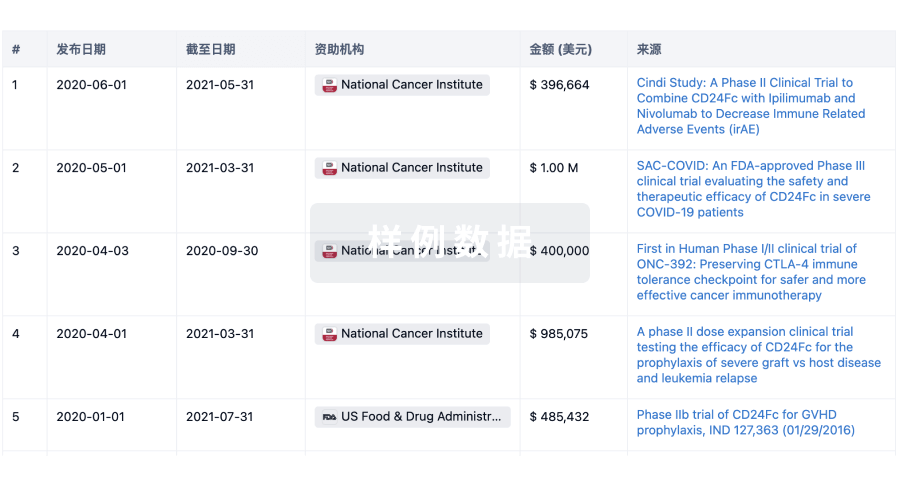
科研基金(NIH)
访问超过 200 万项资助和基金信息,以提升您的研究之旅。
登录
或
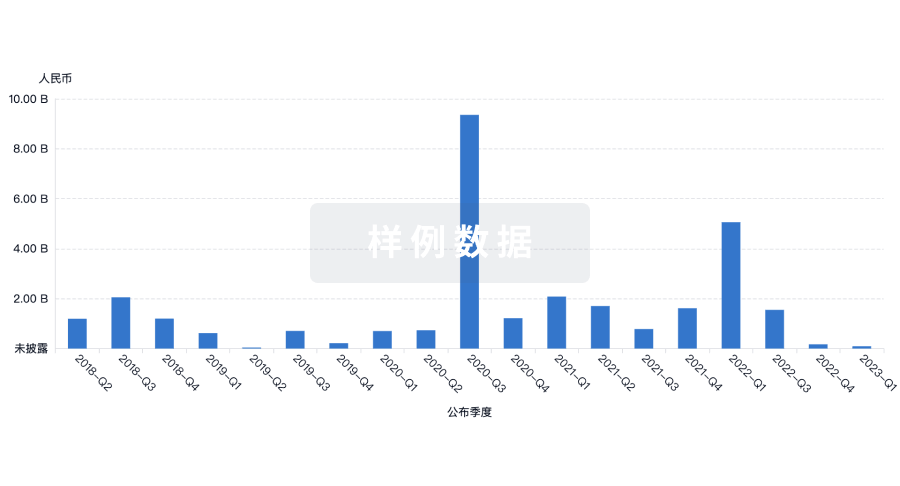
投资
深入了解从初创企业到成熟企业的最新公司投资动态。
登录
或
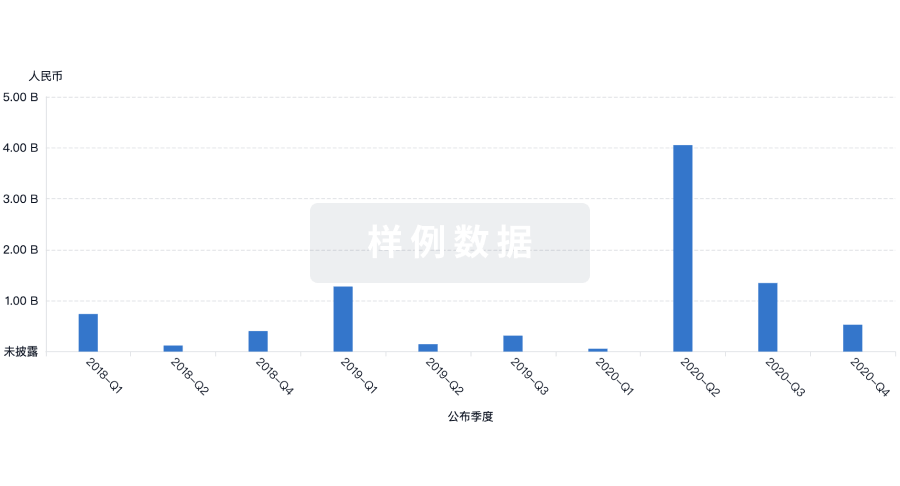
融资
发掘融资趋势以验证和推进您的投资机会。
登录
或
提出任何生物医药研究问题
让每一步生物医药决策都精准制胜
基于十亿级生物数据与全球情报的精准 AI,赋能早期药物发现
立即开始免费试用!
智慧芽新药情报库是智慧芽专为生命科学人士构建的基于AI的创新药情报平台,助您全方位提升您的研发与决策效率。
立即接入生物医药数据包
智慧芽新药库数据也通过智慧芽开放平台,以MCP或API服务形式对外开放。立即使用我们的MCP服务定制您的LLM智能体。
生物序列数据库
生物药研发创新
免费使用
化学结构数据库
小分子化药研发创新
免费使用