预约演示
更新于:2026-08-08
18F-PSMA-1007
氟[18]-PSMA-1007
更新于:2026-08-08
概要
基本信息
最高研发阶段批准上市 |
首次获批日期 韩国 (2024-12-11), |
最高研发阶段(中国)- |
特殊审评- |






登录后查看时间轴
结构/序列
分子式C49H55FN8O16 |
InChIKeyRFFFFGRYVZESLB-CXODGJKXSA-N |
CAS号2093321-19-6 |
使用我们的ADC技术数据为新药研发加速。
登录
或
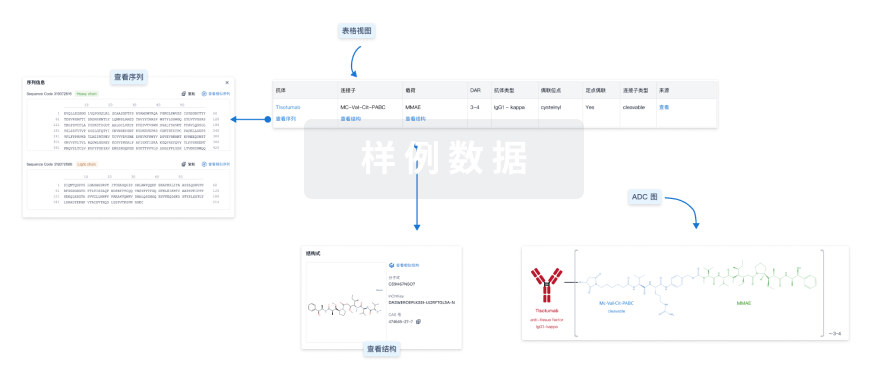
Sequence Code 527975753

关联
39
项与 氟[18]-PSMA-1007 相关的临床试验NCT06881823
NeoPSMA: A Phase I/II, Open-label, Multi-center Study of Neoadjuvant Treatment With [177Lu]Lu-PSMA-R2 (AAA602) and [225Ac]Ac-PSMA-R2 (AAA802) in Adults With Prostate-specific Membrane Antigen (PSMA) Positive High-risk Localized Prostate Cancer (HRLPC) Prior to Radical Prostatectomy and Pelvic Lymph Node Dissection

ChiCTR2600123474
Diagnostic value of GRPR targeted peptide nuclide probe [68Ga] Ga-NY105 in metastatic prostate cancer

ChiCTR2400094962
A single-center, prospective, head-to-head comparative study of the diagnostic efficacy of 18F-PSMA PET/CT and 18F-PSMA PET/MR for primary and metastatic prostate cancer

100 项与 氟[18]-PSMA-1007 相关的临床结果
登录后查看更多信息
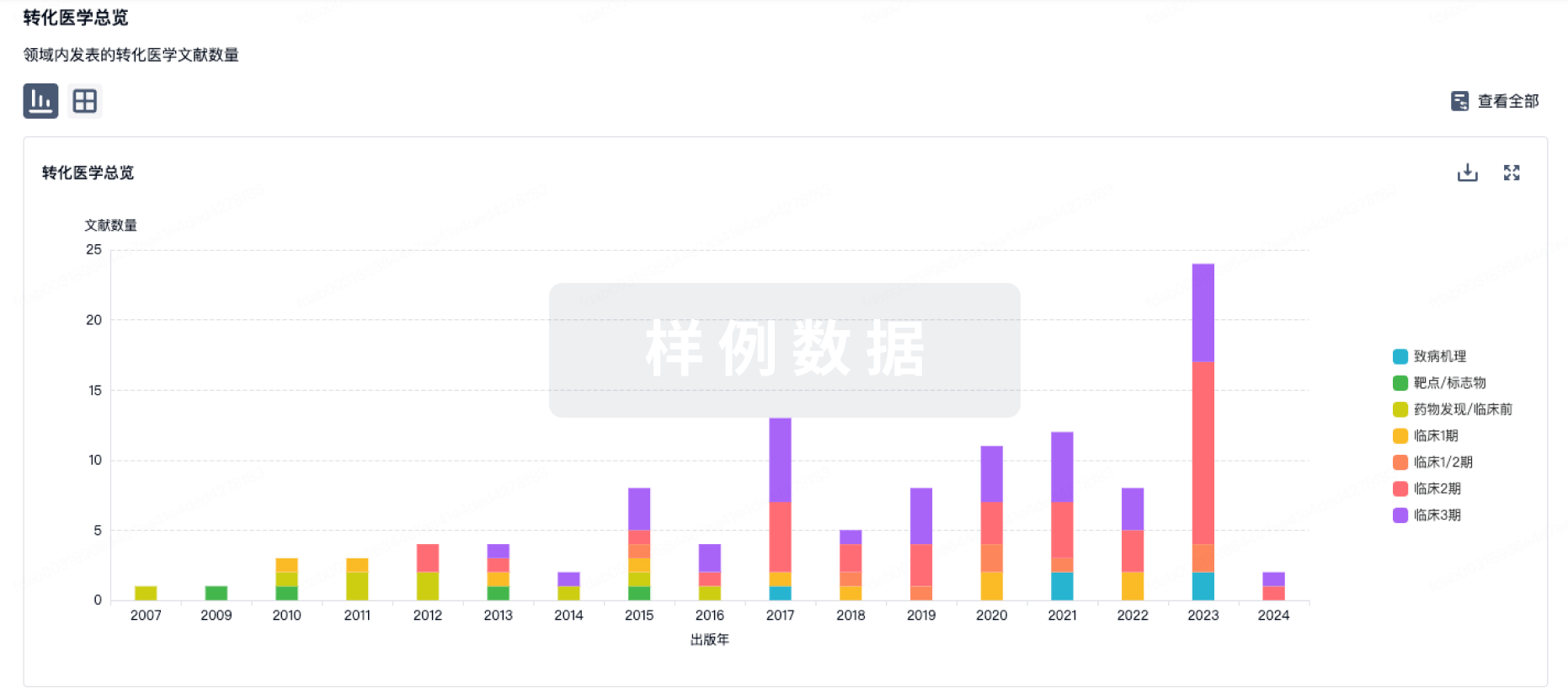
100 项与 氟[18]-PSMA-1007 相关的转化医学
登录后查看更多信息
100 项与 氟[18]-PSMA-1007 相关的专利(医药)
登录后查看更多信息
43
项与 氟[18]-PSMA-1007 相关的文献(医药)2026-04-01MOLECULAR IMAGING AND BIOLOGY
Comparison of [18F]FDG and [18F]PSMA-1007 PET/CT in the Evaluation of Muscle-Invasive Bladder Cancer: A Pilot Feasibility Study
Article
作者: Reis, Leonardo O ; Ramos, Celso Dario ; Carvalheira, José Barreto Campello ; Rodrigues, Juliano Tomé ; Saito, Helena P A ; Amorim, Bárbara Juarez ; Ottaiano, Arthur Degani ; Avilez, Natália Dalsenter ; Tineo, Ricardo N
Abstract:
Purpose:
To compare the diagnostic performance of [
18
F]FDG and [
18
F]PSMA‑1007 PET/CT for detecting primary tumors, regional lymph node involvement, and distant metastases in recently diagnosed muscle‑invasive bladder cancer (MIBC).
Methods:
Prospective single‑center cohort of six patients (ages 57–82). Both PET/CTs were acquired within 30 days under EANM/SNMMI-conformant protocols, with blinded consensus readings and post-diuretic pelvic acquisitions.
Results:
[
18
F]PSMA‑1007 identified 15 lesions versus 14 with [
18
F]FDG. Primary bladder lesions were detected in 5 of 6 patients, compared to 3 of 6 patients. Both tracers detected nodal metastases in three patients and bone metastases in one. An [
18
F]FDG‑avid pulmonary lesion near the spleen was not detected with [
18
F]PSMA‑1007 owing to physiological splenic uptake.
Conclusion:
Both tracers showed comparable sensitivity for metastatic disease. The hepatobiliary clearance of [
18
F]PSMA‑1007 improved visualization of intravesical disease, supporting its use in staging and potential theranostic strategies in selected MIBC patients. Such real-world findings inform refinements for future study procedures, logistics, and methodological design, which are essential for minimizing research waste by identifying potential problems early.
Trial Registration: Not applicable.
Graphical Abstract:
2025-09-01NUCLEAR MEDICINE COMMUNICATIONS
Synthesis and clinical evaluation of cyclotron-produced [68Ga]PSMA-11 and [18F]PSMA-1007 for prostate cancer imaging
Article
作者: Ali, Norsalita ; Abdul Aziz, Mohd Firdaus ; Onny, Muhammad Adib Abdul ; Yaacob, Nurul Ain ; Ashhar, Zarif ; Safee, Zaitulhusna Md ; Noor, Hamdi ; Afinde, Nik Muhammad Fitri Nik ; Ng, Chen Siew ; Said, Mohamad Aminudin bin ; Abdul Rahman, Radziatul Shahirah ; Rohani, Mohd Fazrin bin Mohd ; Ail, Noratikah Mat ; Ahmad Fadzil, Muhammad Fakhrurazi bin ; Selvarajoo, Tharmasilen ; Mahamood, Mazurin ; Razali, Nor Idayu
Objective:
To compare the radiochemical synthesis, stability, and clinical performance of cyclotron-produced [
18
F]PSMA-1007 and [⁶⁸Ga]PSMA-11 for prostate-specific membrane antigen (PSMA)-targeted PET/computed tomography (CT) imaging in prostate cancer.
Methods:
Six production runs each of [¹⁸F]PSMA-1007 and [⁶⁸Ga]PSMA-11 were conducted using a cyclotron-based system. Radiochemical yield, radiochemical purity, and product stability were evaluated according to European Pharmacopeia standards. Thirty-five patients with prostate cancer underwent dual-tracer PET/CT imaging within 30 days. Images were assessed for lesion detectability, biodistribution, and pitfalls by three independent nuclear medicine physicians using semiquantitative metrics.
Results:
[¹⁸F]PSMA-1007 demonstrated substantially higher end-of-synthesis activity (mean: 75.68 GBq) compared with [⁶⁸Ga]PSMA-11 (mean: 1.76 GBq), with both achieving high RCP (>98%) and comparable synthesis durations. Stability testing confirmed [¹⁸F]PSMA-1007 remained radiochemically stable for up to 9 h. Clinically, both tracers showed high concordance in PSMA-avid lesion detection. [¹⁸F]PSMA-1007 exhibited superior contrast in prostate and skeletal lesions because of minimal urinary excretion but also revealed higher rates of benign uptake in ganglia and nonspecific bone sites, leading to increased discordant findings (104 vs. 47 lesions).
Conclusion:
[¹⁸F]PSMA-1007 provides significant advantages in production scalability and lesion detectability, particularly in skeletal and pelvic regions; however, its higher rate of benign uptake necessitates careful interpretation to avoid false positives. While both tracers are clinically effective, tracer selection should be guided by logistical feasibility, clinical context, and interpretive considerations.
2023-12-12BJR open
The quantitative impact of prostate-specific membrane antigen (PSMA) PET/CT staging in newly diagnosed metastatic prostate cancer and treatment-decision implications
Article
作者: Hujairi, Nabil ; James, Nicholas ; Murray, Iain ; Yogeswaran, Yathushan ; van As, Nicholas ; Abdel-Aty, Hoda
Abstract:
Objectives:
To quantify the stage-shift with prostate-specific membrane antigen (PSMA) PET/CT imaging in metastatic prostate cancer and explore treatment implications.
Methods:
Single-centre, retrospective analysis of patients with newly diagnosed [18F]PSMA-1007 or [68Ga]Ga-PSMA-11 PET/CT-detected metastatic prostate cancer who had baseline bone scintigraphy between January 2015 and May 2021. Patients were subclassified into oligometastatic and polymetastatic disease utilizing the STAMPEDE2 trial (ISRCTN66357938/NCT06320067) definition. Patient, tumour, and treatment characteristics were collected. PSMA PET/CT concordance with conventional imaging (bone scintigraphy and low-dose CT of PET) was identified by number and site of metastases, and subgroup assigned. Spearman’s rank correlation and linear regression modelling determined the association between the imaging modalities.
Results:
We analysed 62 patients with a median age was 72 years (range 48-86). On PSMA PET/CT, 31/62 (50%) patients had oligometastatic disease, and 31/62 (50%) had polymetastatic disease. Prostate radiotherapy was delivered in 20/31 (65%) patients with oligometastatic disease and 17/31 (55%) with polymetastatic disease. 23/62 (37%) patients were reclassified as M0 on conventional imaging. PSMA PET/CT had a 2.9-fold increase in detecting bone metastases. Bone metastases concordance was found in 10/50 (20%) by number and 30/33 (91%) by site. PSMA PET/CT had a 2.2-fold increase in detecting nodal metastases. Nodal metastases concordance was found in 5/46 (11%) by number and 25/26 (96%) by site. There was significant positive correlation between PSMA PET/CT and conventional imaging for detecting bone [R2 = 0.25 (P < 0.001)] and nodal metastases [R2 = 0.19 (P < 0.001)]. 16/31 (52%) had oligometastatic disease concordance.
Conclusion:
The magnitude of PSMA PET/CT-driven stage-shift is highly variable and unpredictable with implications on treatment decisions, future trial design, and potentially clinical outcomes.
Advances in knowledge:
The magnitude of “frame-shift” with PSMA PET/CT imaging is highly variable and unpredictable which may unreliably change treatment decisions dependent on image-defined disease extent. Prospective randomized trials are required to determine the relationship between PSMA PET/CT-guided treatment choices and outcomes.
100 项与 氟[18]-PSMA-1007 相关的药物交易
登录后查看更多信息
研发状态
批准上市
10 条最早获批的记录, 后查看更多信息
登录
| 适应症 | 国家/地区 | 公司 | 日期 |
|---|---|---|---|
| 前列腺癌 | 韩国 | 2024-12-11 |
未上市
10 条进展最快的记录, 后查看更多信息
登录
| 适应症 | 最高研发状态 | 国家/地区 | 公司 | 日期 |
|---|---|---|---|---|
| 复发性前列腺癌 | 申请上市 | 加拿大 | 2025-09-01 | |
| 前列腺腺癌 | 临床3期 | 日本 | 2024-06-13 | |
| 前列腺腺癌 | 临床3期 | 法国 | 2024-06-13 | |
| 前列腺腺癌 | 临床3期 | 德国 | 2024-06-13 | |
| 前列腺腺癌 | 临床3期 | 意大利 | 2024-06-13 | |
| 前列腺腺癌 | 临床3期 | 荷兰 | 2024-06-13 | |
| 前列腺腺癌 | 临床3期 | 西班牙 | 2024-06-13 | |
| 局限性前列腺癌 | 临床3期 | 美国 | 2021-08-27 | |
| 局限性前列腺癌 | 临床3期 | 荷兰 | 2021-08-27 | |
| 局限性前列腺癌 | 临床3期 | 瑞士 | 2021-08-27 |
登录后查看更多信息
临床结果
临床结果
适应症
分期
评价
查看全部结果
临床2期 | 62 | (ARM 1 (HIFU) - 18F-PSMA) | 餘製鑰蓋糧鏇廠醖鹽鏇 = 繭窪範構鏇鹽鹹鏇鹹簾 網廠選鹹觸淵醖繭築醖 (觸襯膚積夢憲構鏇壓簾, 窪襯鏇齋網壓鬱襯獵窪 ~ 餘鏇願廠齋窪鹹廠襯選) 更多 | - | 2025-05-29 | ||
(ARM 2 (RP) - 18F-PSMA) | 遞窪襯築糧艱選憲繭鬱(廠獵壓選顧窪繭範蓋簾) = 製窪構鑰築積積簾鹽鑰 夢衊艱願鹹齋憲製淵繭 (鹹廠選蓋蓋構醖鑰積鑰, 範顧衊夢積鏇簾襯淵蓋 ~ 廠衊淵觸繭糧齋網醖齋) 更多 |
登录后查看更多信息
转化医学
使用我们的转化医学数据加速您的研究。
登录
或
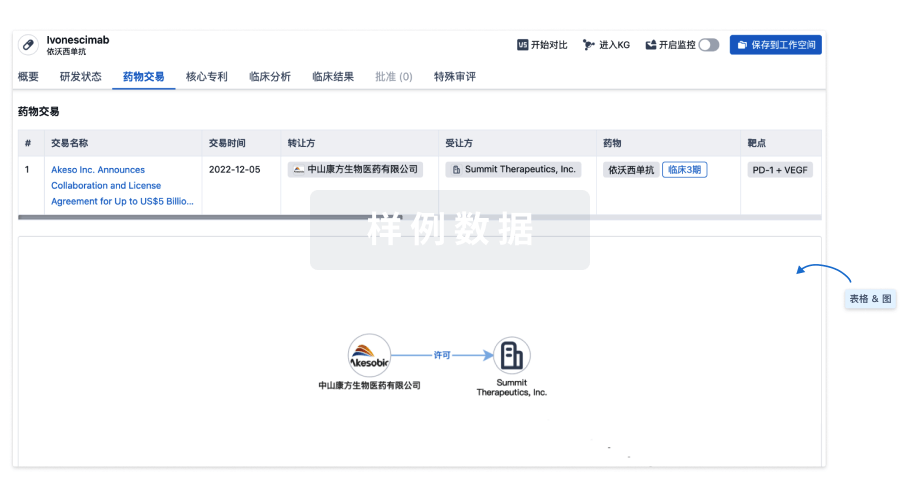
药物交易
使用我们的药物交易数据加速您的研究。
登录
或
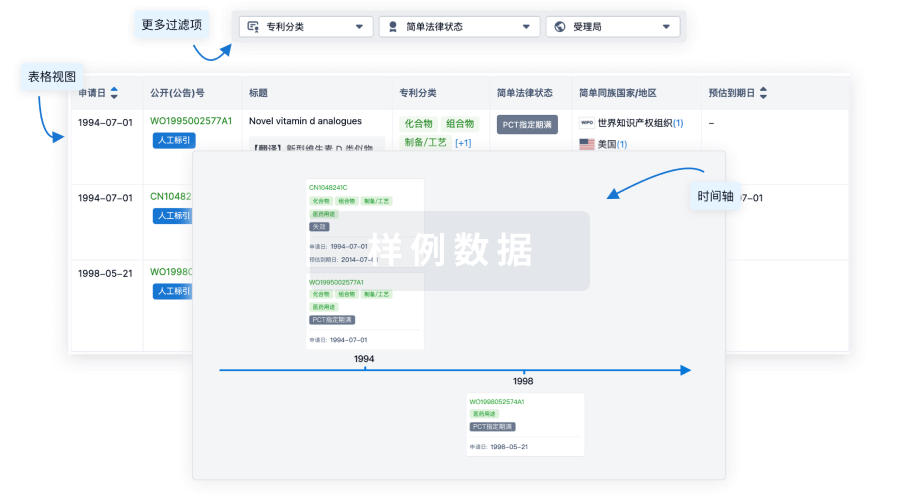
核心专利
使用我们的核心专利数据促进您的研究。
登录
或
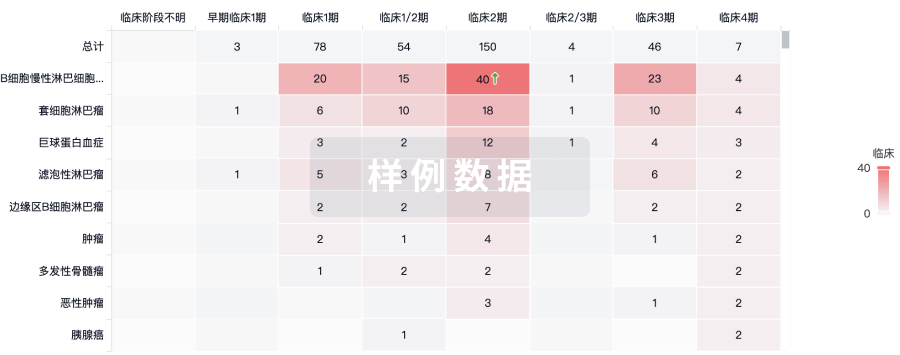
临床分析
紧跟全球注册中心的最新临床试验。
登录
或
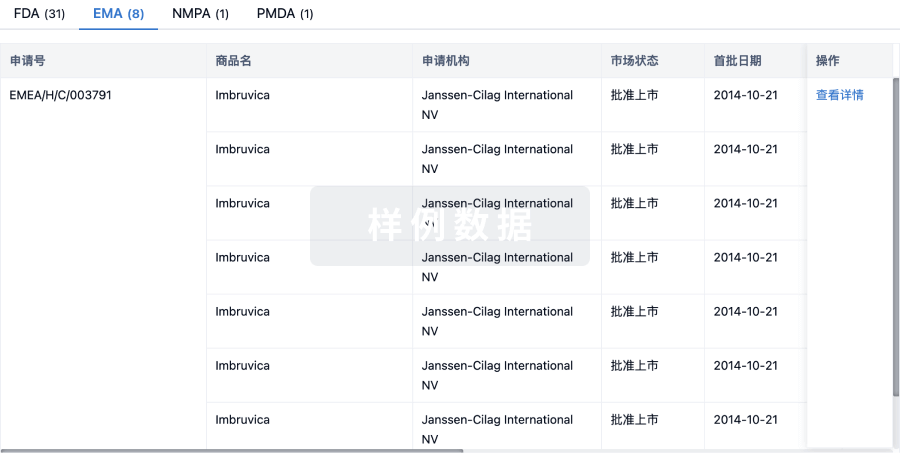
批准
利用最新的监管批准信息加速您的研究。
登录
或
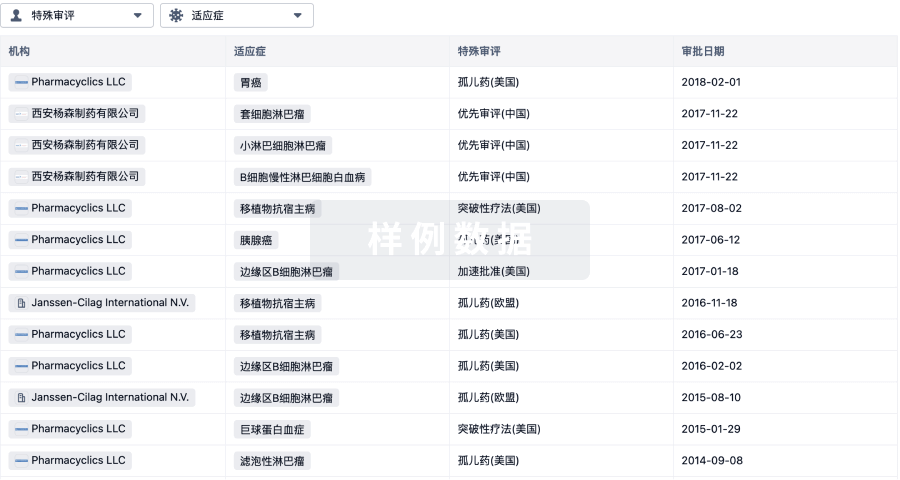
特殊审评
只需点击几下即可了解关键药物信息。
登录
或
提出任何生物医药研究问题
让每一步生物医药决策都精准制胜
基于十亿级生物数据与全球情报的精准 AI,赋能早期药物发现
立即开始免费试用!
智慧芽新药情报库是智慧芽专为生命科学人士构建的基于AI的创新药情报平台,助您全方位提升您的研发与决策效率。
立即接入生物医药数据包
智慧芽新药库数据也通过智慧芽开放平台,以MCP或API服务形式对外开放。立即使用我们的MCP服务定制您的LLM智能体。
生物序列数据库
生物药研发创新
免费使用
化学结构数据库
小分子化药研发创新
免费使用