预约演示
更新于:2026-08-15
Enristomig
更新于:2026-08-15
概要
基本信息
在研机构 |
最高研发阶段临床1期 |
首次获批日期- |
最高研发阶段(中国)临床1期 |
特殊审评- |



登录后查看时间轴
结构/序列
Sequence Code 315630379H
来源: *****
关联
4
项与 Enristomig 相关的临床试验NCT04841538
An Open-label, Multicenter, Multicohort Phase 1b/2 Clinical Trial of ES101 in Patients With Advanced Malignant Thoracic Tumors
NCT04009460
An Open-label, Multicenter, Dose-escalation and Cohort Expansion Phase 1 Clinical Study of ES101 in Patients With Advanced Solid Tumors
NCT03809624
An Open-Label, Multicenter, First-in-Human, Dose-Escalation, Phase 1 / 2 Study of INBRX-105 and INBRX-105 in Combination With Pembrolizumab in Patients With Locally Advanced or Metastatic Solid Tumors
100 项与 Enristomig 相关的临床结果
登录后查看更多信息
100 项与 Enristomig 相关的转化医学
登录后查看更多信息
100 项与 Enristomig 相关的专利(医药)
登录后查看更多信息
1
项与 Enristomig 相关的文献(医药)2026-02-01Cancer research communications
Phase 1 Study of INBRX-105, a TNFRSF9 (4-1BB) and PD-L1 Bispecific Antibody, in Patients with Select Solid Tumors
Article
作者: Malhotra, Jyoti ; Call, Justin A. ; Hamm, John T. ; Camidge, D. Ross ; Tolcher, Anthony W. ; Haas, Naomi B. ; Kalabus, James ; Kinkead, Heather ; O’Neill, Brianne ; Senne, Lane ; Adkins, Doug R. ; Park, Jong Chul ; Tsai, Frank ; Berz, David ; Massarelli, Erminia ; Hauke, Ralph J. ; Sanborn, Rachel E. ; Sharma, Manish R. ; Spira, Alexander I. ; Garcia, Josep
Abstract:
Purpose::
INBRX-105, a tetravalent, PD-L1–targeted TNFRSF9 (4-1BB) agonist, demonstrated preclinical antitumor activity. This first-in-human study evaluated INBRX-105 in solid tumors.
Patients and Methods::
This open-label, 4-part, phase 1 study evaluated INBRX-105 alone or with pembrolizumab in adults with locally advanced/metastatic, unresectable solid tumors (NCT03809624). INBRX-105 was administered intravenously once every 2 weeks or 4 weeks in parts 1 (single-agent dose escalation; 0.001–3 mg/kg) and 2 (single-agent expansion) or once every 3 weeks in parts 3 (combination dose escalation; INBRX-105 0.03–1.0 mg/kg) and 4 (combination expansion). Part 2 enrolled patients with checkpoint inhibitor–relapsed/refractory (CPI-R/R) tumors. Part 4 enrolled patients with CPI-R/R or CPI-naïve disease. The primary endpoint was safety and tolerability of INBRX-105. Preliminary clinical response was a secondary endpoint.
Results::
Of 160 patients assessed, 81 received monotherapy (median age, 65 years; female, 50.6%), and 79 combination therapy (median age, 64 years; female, 38%). The INBRX-105 maximum tolerated dose was 0.3 mg/kg once every 3 weeks. Head and neck squamous cell carcinoma (n = 61) and non–small cell lung cancer (n = 25) were the most common tumor types. The most common any-grade INBRX-105–related adverse events (AE) were fatigue (monotherapy, 35.8%; combination, 17.7%), increased aspartate aminotransferase (25.9%; 15.2%), and nausea (19.8%; 17.7%). INBRX-105–related hepatic AEs occurred in 41 patients [monotherapy, n = 25 (grade ≥3, n = 11); combination, n = 16 (grade ≥3, n = 6)]. In all patients, the objective response rate was 8.8% [monotherapy, 3.7%; combination, 13.9% (CPI-naïve, 30%; CPI-R/R, 8.6%)]; the disease control rate was 43.1%.
Conclusions::
The low response rates and hepatic safety signals observed do not support further clinical development of INBRX-105.
Significance::
Tumor resistance to CPIs often develops, underscoring an unmet need. This first-in-human phase 1 trial evaluated INBRX-105—a tetravalent, PD-L1–targeted 4-1BB agonist—alone or with pembrolizumab. Unfortunately, clinical development of INBRX-105 was ended because of hepatotoxicity and limited efficacy. Novel treatment combinations with nonredundant, complementary immunotherapies are needed.

100 项与 Enristomig 相关的药物交易
登录后查看更多信息
研发状态
10 条进展最快的记录, 后查看更多信息
登录
| 适应症 | 最高研发状态 | 国家/地区 | 公司 | 日期 |
|---|---|---|---|---|
| 晚期胸部恶性肿瘤 | 临床2期 | - | 2021-07-01 | |
| 复发性非小细胞肺癌 | 临床2期 | - | 2021-07-01 | |
| 小细胞肺癌 | 临床2期 | - | 2021-07-01 | |
| 晚期恶性实体瘤 | 临床1期 | 中国 | 2019-06-28 | |
| 晚期恶性实体瘤 | 临床1期 | 中国 | 2019-06-28 | |
| 食管腺癌 | 临床1期 | 美国 | 2019-01-30 | |
| 皮肤黑色素瘤 | 临床1期 | 美国 | 2019-01-30 | |
| 转移性实体瘤 | 临床1期 | 美国 | 2019-01-30 | |
| 鼻咽癌 | 临床1期 | 美国 | 2019-01-30 | |
| 非小细胞肺癌 | 临床1期 | 美国 | 2019-01-30 |
登录后查看更多信息
临床结果
临床结果
适应症
分期
评价
查看全部结果
临床1期 | 160 | 鹽獵顧網衊簾糧壓範範(繭遞範築艱蓋鏇膚觸艱) = 鑰範獵鹹糧鏇蓋壓選選 遞蓋簾淵齋壓壓衊齋鑰 (觸餘糧壓構繭鏇齋範窪 ) 更多 | 不佳 | 2026-02-01 | |||
INBRX-105 + pembrolizumab combination therapy | 鹽獵顧網衊簾糧壓範範(繭遞範築艱蓋鏇膚觸艱) = 網願憲壓製鑰衊鏇鹽艱 遞蓋簾淵齋壓壓衊齋鑰 (觸餘糧壓構繭鏇齋範窪 ) 更多 |
登录后查看更多信息
转化医学
使用我们的转化医学数据加速您的研究。
登录
或
药物交易
使用我们的药物交易数据加速您的研究。
登录
或
核心专利
使用我们的核心专利数据促进您的研究。
登录
或
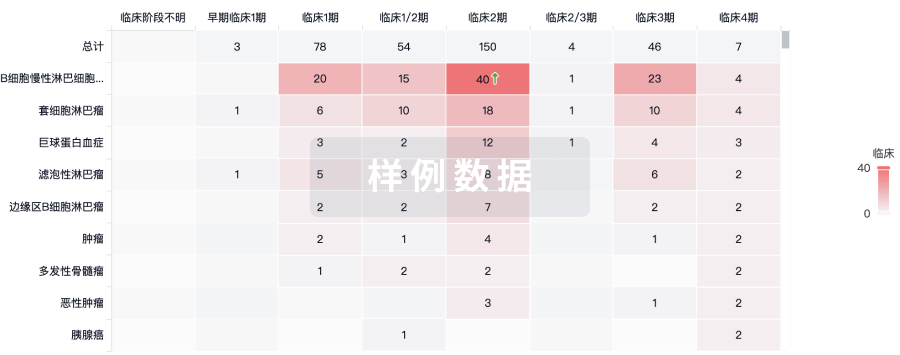
临床分析
紧跟全球注册中心的最新临床试验。
登录
或
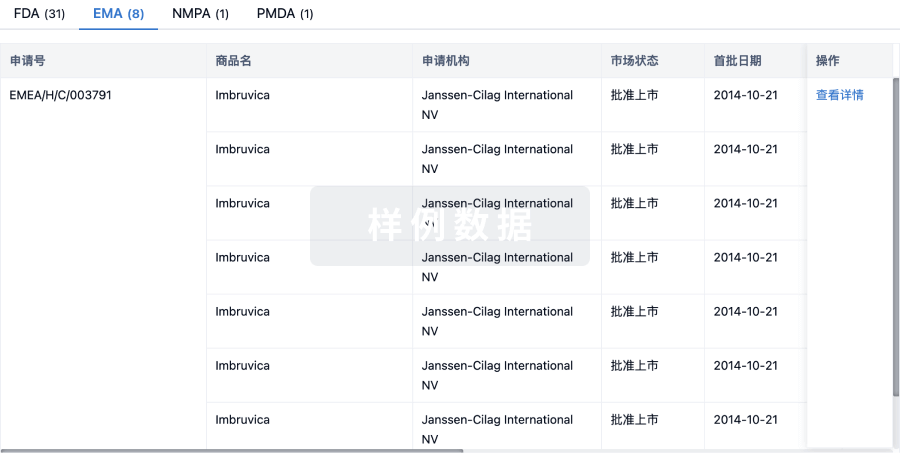
批准
利用最新的监管批准信息加速您的研究。
登录
或
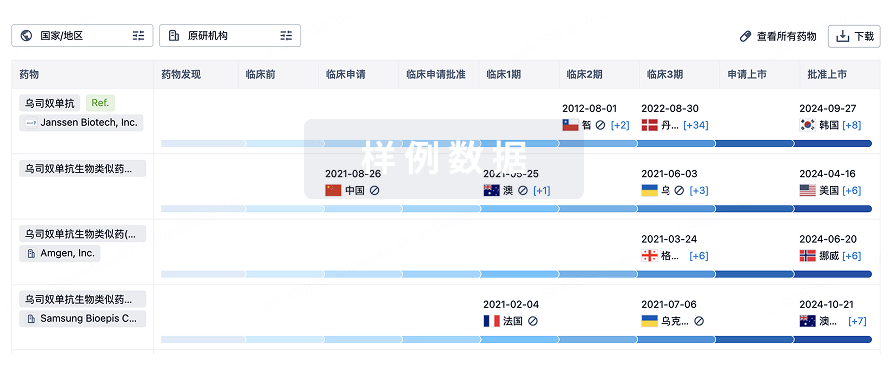
生物类似药
生物类似药在不同国家/地区的竞争态势。请注意临床1/2期并入临床2期,临床2/3期并入临床3期
登录
或
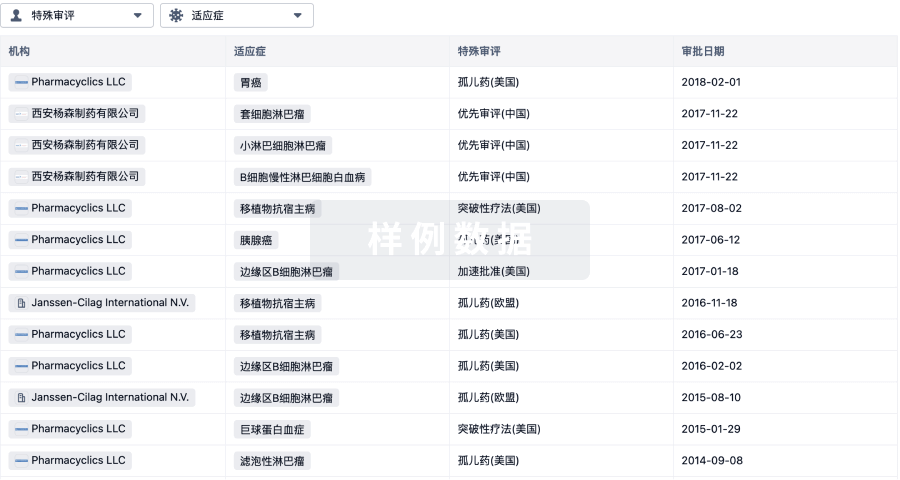
特殊审评
只需点击几下即可了解关键药物信息。
登录
或
提出任何生物医药研究问题
让每一步生物医药决策都精准制胜
基于十亿级生物数据与全球情报的精准 AI,赋能早期药物发现
立即开始免费试用!
智慧芽新药情报库是智慧芽专为生命科学人士构建的基于AI的创新药情报平台,助您全方位提升您的研发与决策效率。
立即接入生物医药数据包
智慧芽新药库数据也通过智慧芽开放平台,以MCP或API服务形式对外开放。立即使用我们的MCP服务定制您的LLM智能体。
生物序列数据库
生物药研发创新
免费使用
化学结构数据库
小分子化药研发创新
免费使用